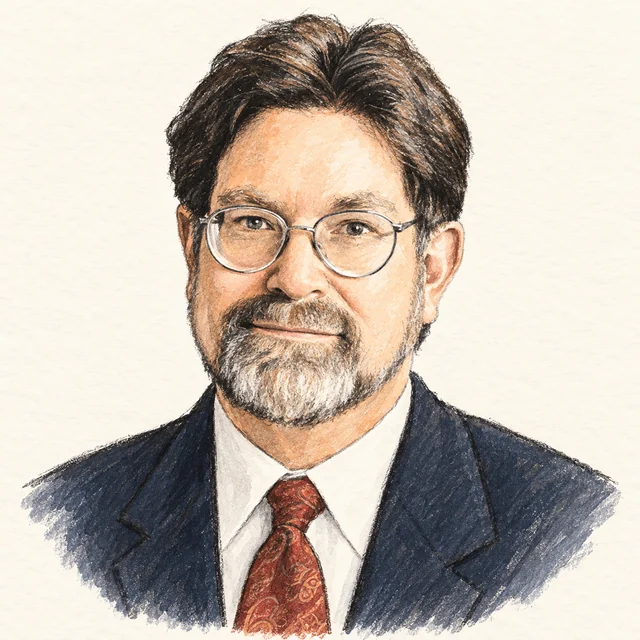
A life in context
The person behind the prize
Smoot grew up with an interest in mathematics and physics, encouraged by his parents and by the excitement surrounding early spaceflight. He earned his doctorate at MIT in 1970 and moved to Berkeley. His research used measurements of radiation to investigate the universe on its largest scales, where careful calibration and the removal of foreground signals are essential.
The contribution
Smoot led COBE’s Differential Microwave Radiometer investigation. In 1992 the team reported extremely small variations in the cosmic microwave background from one direction to another. These variations provided evidence of uneven conditions in the early universe from which gravity could build later structure. They were not photographs of the first galaxies or a direct view of the universe’s first instant.
The idea in plain language
The sky contains a faint microwave glow left from an early hot stage of the universe. As space expanded, that radiation stretched and cooled. COBE measured it from above the atmosphere. Mather’s experiment found the precise pattern of intensity across frequencies expected from thermal radiation, a blackbody spectrum at about 2.7 kelvin today.
Read the full award story ↗