A life in context
The person behind the prize
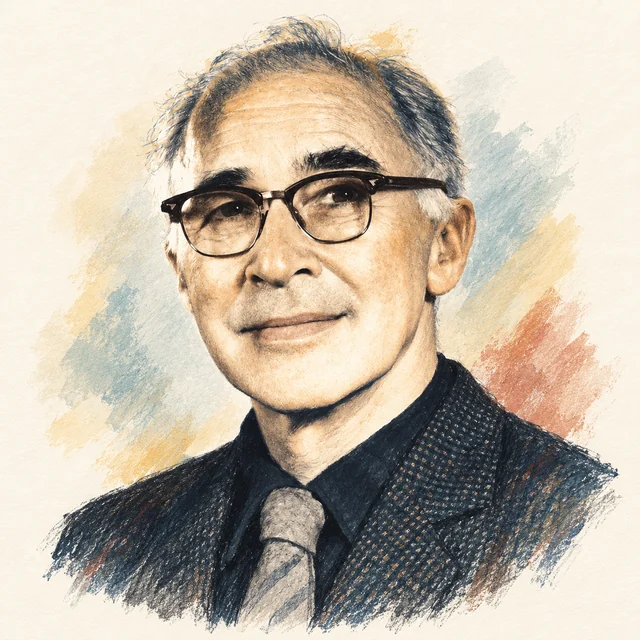
Wald graduated from New York University in 1927 and completed his Columbia zoology doctorate with Selig Hecht in 1932. Fellowship research with Warburg in Berlin identified vitamin A in the retina; work with Karrer in Zurich helped establish the chemical identification. He also worked in Heidelberg and Chicago. Joining Harvard in 1934, he became professor of biology in 1948. His research clarified visual pigments, the vitamin-A-derived light-absorbing component and changes initiated by light. Ruth Hubbard was an important collaborator, explicitly acknowledged in the award ceremony. Harvard was his 1967 affiliation. The discoveries concern underlying visual chemistry, without constituting advice about supplements or treatment.
The contribution
Wald clarified the chemistry of visual pigments and their light-induced changes. He received one third of the Medicine Prize.
The idea in plain language
Light reception begins with light-sensitive pigments. Wald and collaborators, including Ruth Hubbard, clarified the vitamin-A-related chemistry of visual pigments and the changes initiated by light. A vitamin-A-derived component works within a protein; it is not a free vitamin molecule acting alone.
Read the full award story ↗