A life in context
The person behind the prize
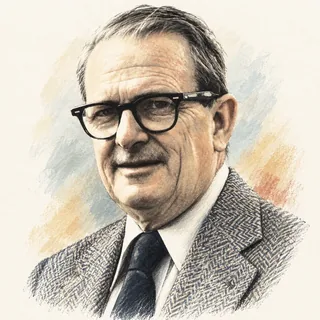
Hounsfield grew up on a Nottinghamshire farm, experimenting with mechanical and electrical devices. Wartime work as an RAF radar instructor led to engineering study at Faraday House. He joined EMI in 1951 and later led work on the transistor-based EMIDEC 1100 computer. After an unsuccessful computer-memory project, freedom to explore other research helped him pursue the idea of reconstructing images from many radiation measurements in 1967. Slow laboratory tests preceded an X-ray brain scanner for clinical use. With radiologist James Ambrose and an engineering team, the first patient scan took place at Atkinson Morley Hospital in 1971. Subsequent prototypes expanded imaging beyond the brain.
The contribution
Hounsfield turned reconstruction ideas into a practical computer-assisted X-ray scanner and clinical imaging method. He received one half of the Medicine Prize. Engineering, radiology and team experimentation were crucial; the first patient scan preceded the 1979 award by eight years.
The idea in plain language
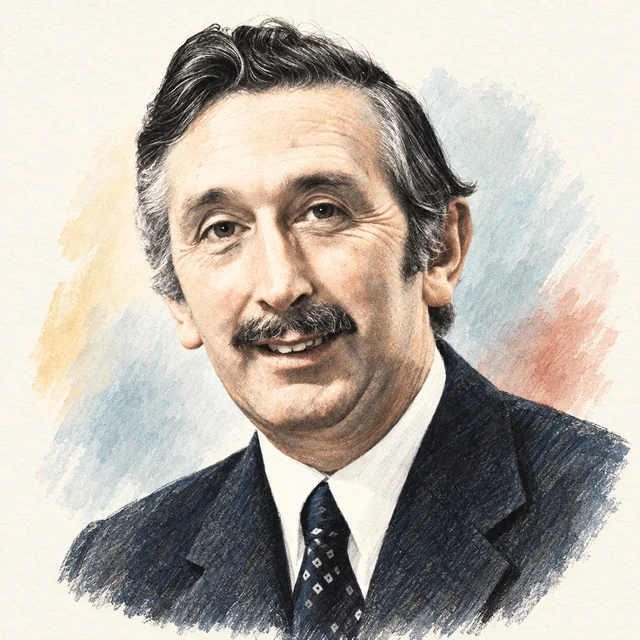
An X-ray beam weakens as it passes through matter. Each measurement reflects the combined attenuation along its path, rather than the value at one isolated point. Cormack investigated how many such measurements could be used to recover an internal distribution, publishing work in 1963 and 1964. The key problem is mathematical: infer a section from overlapping path measurements.
Read the full award story ↗