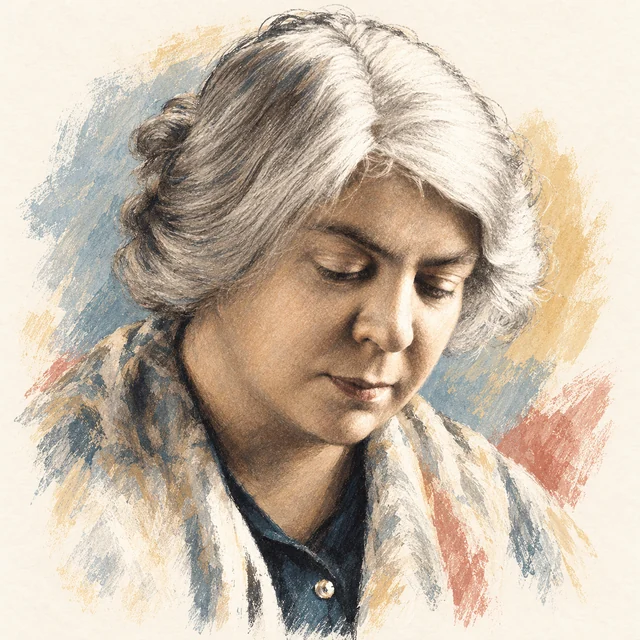
A life in context
The person behind the prize
Deledda grew up in Nuoro in Sardinia, where family life, local stories and the surrounding mountains supplied lasting material for her fiction. Her formal schooling was limited; private lessons and wide reading helped her develop as a writer in Italian. She began publishing while young and established herself through novels including Fior di Sardegna in 1892 and Elias Portolú in 1903. She married in 1900 and moved to Rome, continuing to write about Sardinia while also using other settings. Cenere, Canne al vento and La Madre explore desire, responsibility, guilt and the possibility of renewal through individual lives. Landscape in these books helps shape the emotional world of the characters rather than serving only as scenery. Her full Literature Prize belonged to 1926 but was announced and presented in 1927, separately from Bergson’s 1927 prize. Deledda continued writing until her death in 1936. Later posthumous publications form part of her legacy, but were not the basis of the original award.
The contribution
Deledda received the full 1926 Literature Prize, awarded in 1927, for fiction combining vivid representations of Sardinian life with sympathetic treatment of wider human problems.
The idea in plain language
How can writing rooted in one place speak beyond that place? Deledda made the landscapes, customs and family relationships of Sardinia part of the emotional structure of her fiction. Mountains, journeys and domestic spaces help reveal what characters fear, want and believe they owe to others.
Read the full award story ↗

