A life in context
The person behind the prize
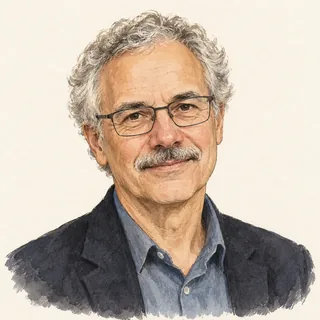
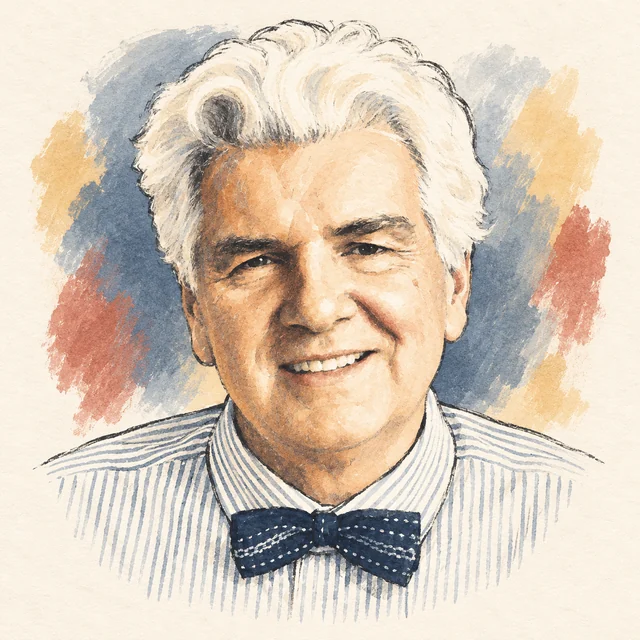
Blobel’s childhood was disrupted by war and displacement. He studied medicine in Germany, graduating at Tübingen in 1960, then turned from clinical training to research. After a doctorate at Wisconsin in 1966, he joined George Palade’s laboratory at Rockefeller. That laboratory’s work on cell structure became the foundation for his molecular investigation of how proteins reach the places where they function.
The contribution
Blobel proposed and experimentally developed the signal hypothesis: information in a protein’s amino-acid sequence can direct its transport across a membrane and its location within a cell. His work with colleagues established how newly forming secretory proteins enter the endoplasmic reticulum and helped generalize the idea of targeting signals to other compartments. The discovery connected a protein’s sequence with the cell machinery that sorts and transports it.
The idea in plain language
Cells make many proteins, but a protein is useful only if it reaches an appropriate location. Membranes separate compartments and form barriers to large molecules. The puzzle was how a newly synthesized protein could be directed toward a particular compartment and transported through its membrane rather than remain wherever it was made.
Read the full award story ↗