A life in context
The person behind the prize
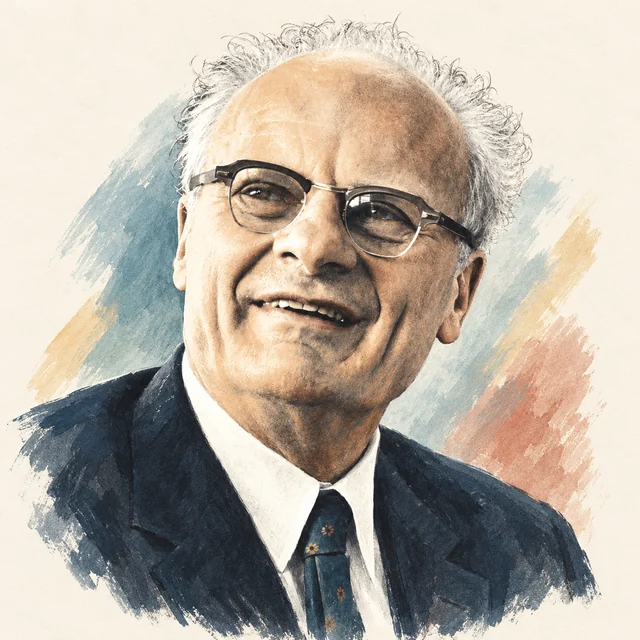
Bethe completed his Munich doctorate with Arnold Sommerfeld in 1928. He worked in German universities and visited Cambridge and Rome before losing his Tübingen appointment under the Nazi regime in 1933. Moving first to England, he joined Cornell in 1935 and became professor in 1937. His quantitative work on nuclear reactions helped identify pathways by which hydrogen burning supplies stellar energy. The major stellar-energy paper was received in September 1938 and published in March 1939. He also worked on atomic collisions, nuclear matter and quantum electrodynamics. Wartime research included radar at MIT and leadership in theoretical work at Los Alamos. He returned to Cornell, his 1967 affiliation. The award recognised nuclear-reaction theory, especially stellar energy production, rather than assigning him sole authorship of every fusion idea.
The contribution
Bethe explained nuclear reactions and their role in stellar energy production. He received the full Physics Prize.
The idea in plain language
A star can shine for immense periods because nuclear reactions in its interior release energy. Bethe assessed possible reactions using nuclear physics and stellar conditions, helping explain why hydrogen burning can support this energy supply.
Read the full award story ↗

