c.curionodeThe Nobel Archive

1967 · Physics

Explaining the nuclear energy of stars

Bethe connected nuclear-reaction theory with pathways that allow hydrogen burning to supply stellar energy.

Nuclear reactionsStellar energyHydrogen burning
1967Physics

Visual guide

The prize, pictured

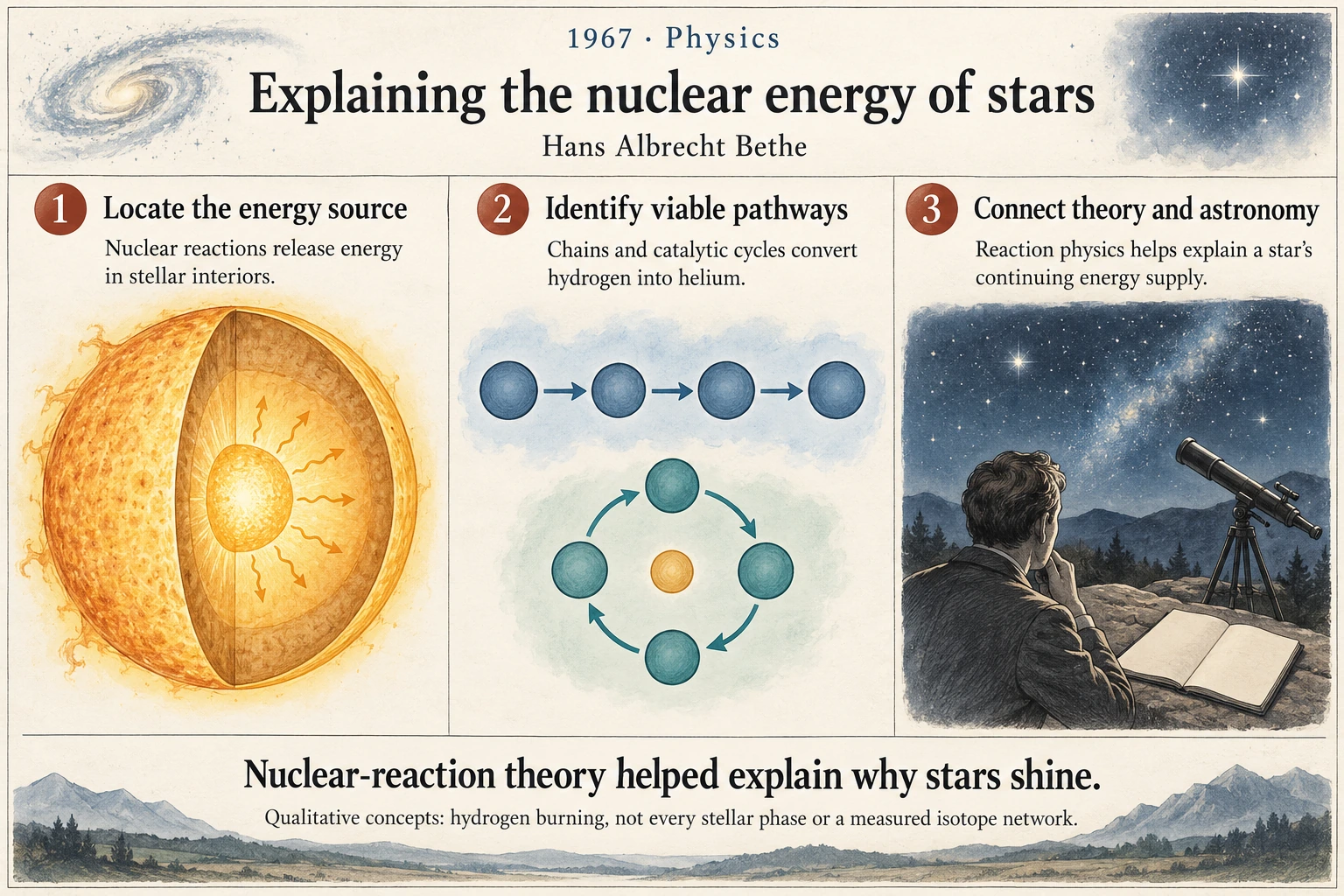
Infographic explaining Explaining the nuclear energy of stars
Original AI-generated infographic. A conceptual overview; the explanations and sources below provide context.
Read the poster text

Nuclear-reaction theory helped explain why stars shine.

  1. Locate the energy source

    Nuclear reactions release energy in stellar interiors.

  2. Identify viable pathways

    Chains and catalytic cycles convert hydrogen into helium.

  3. Connect theory and astronomy

    Reaction physics helps explain a star’s continuing energy supply.

Qualitative concepts: hydrogen burning, not every stellar phase or a measured isotope network.

01 · The discovery

The idea, in everyday language

A star can shine for immense periods because nuclear reactions in its interior release energy. Bethe assessed possible reactions using nuclear physics and stellar conditions, helping explain why hydrogen burning can support this energy supply.

The proton–proton chain and carbon–nitrogen–oxygen cycle both convert hydrogen into helium through multiple reactions. Their relative importance depends on stellar conditions: proton–proton reactions dominate in the Sun, while the catalytic cycle is more important in hotter, more massive main-sequence stars. Carbon, nitrogen and oxygen participate in the cycle rather than providing its main consumed fuel.

Why it matters

This work connected microscopic nuclear processes with a major astronomical question. The award also recognised Bethe’s broader contributions to nuclear-reaction theory, building on earlier research and other scientists’ work.

02 · The people

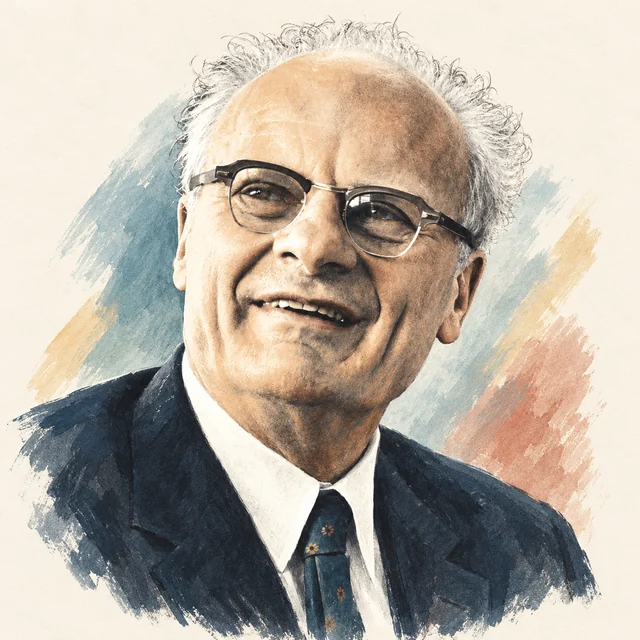
Who brought the idea to life?

03 · Years in the making

The path here

  1. 1928

    Bethe completes his Munich doctorate.

  2. 1935

    He joins Cornell.

  3. 1938

    He develops stellar-energy work; the major paper is received in September.

  4. 1939

    Energy Production in Stars is published in March.

  5. 1967

    He receives the Physics Prize.

04 · Read further

From the original sources

Original explanations by Curionode, based on the official records below. Biographical details and affiliations refer to the award year.

  1. Official award summary nobelprize.org
  2. Award ceremony speech nobelprize.org
  3. Bethe original abstract (1939) journals.aps.org
  4. APS stellar-energy history physics.aps.org
  5. Official biography: Hans Albrecht Bethe nobelprize.org