c.curionodeThe Nobel Archive

1968 · Physics

From bubble tracks to short-lived particles

Alvarez combined large hydrogen bubble chambers with measurement and computer analysis. The resulting evidence revealed many particle resonance states.

Bubble chambersResonance statesData analysis
1968Physics

Visual guide

The prize, pictured

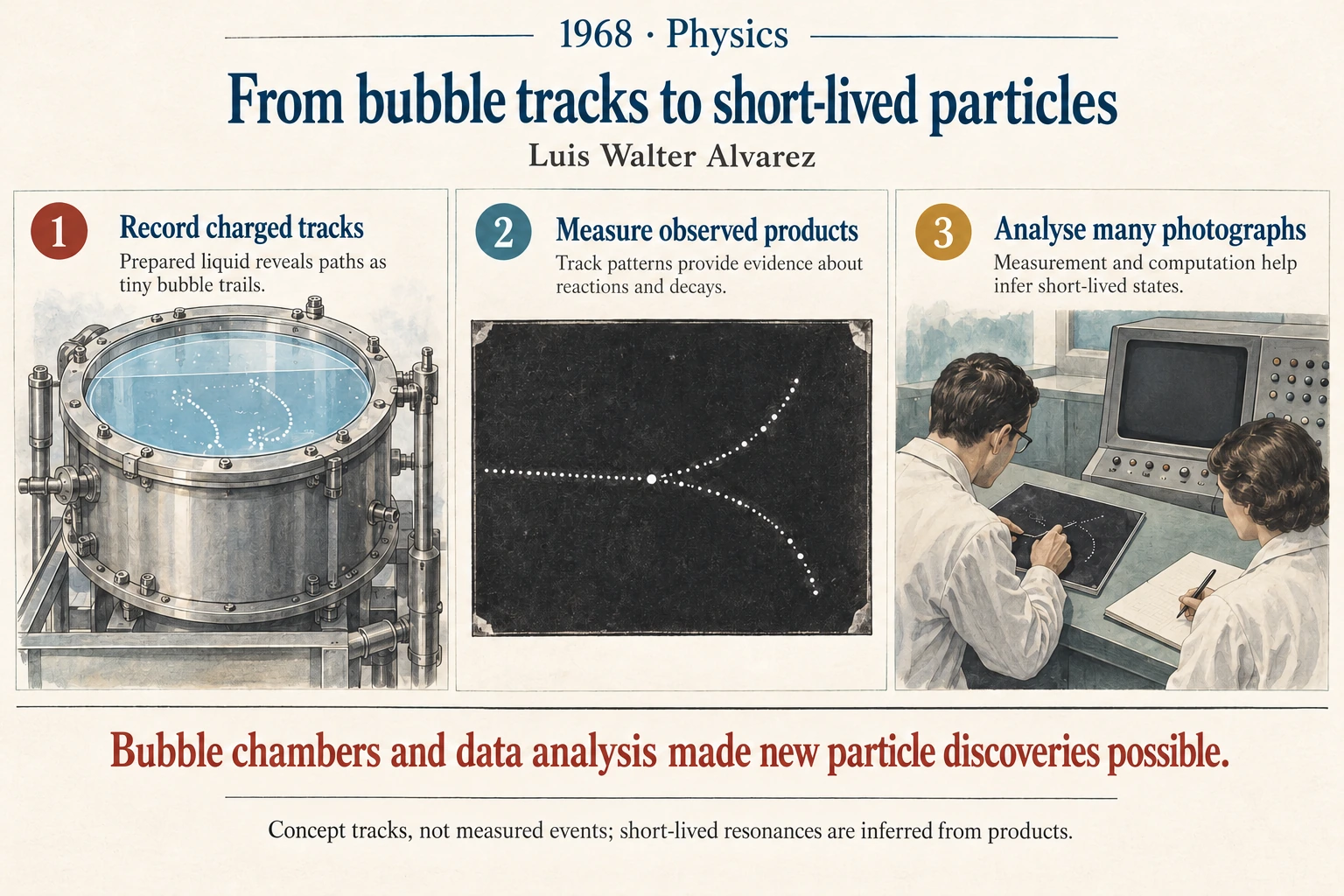
Infographic explaining From bubble tracks to short-lived particles
Original AI-generated infographic. A conceptual overview; the explanations and sources below provide context.
Read the poster text

Bubble chambers and data analysis made new particle discoveries possible.

  1. Record charged tracks

    Prepared liquid reveals paths as tiny bubble trails.

  2. Measure observed products

    Track patterns provide evidence about reactions and decays.

  3. Analyse many photographs

    Measurement and computation help infer short-lived states.

Concept tracks, not measured events; short-lived resonances are inferred from products.

01 · The discovery

The idea, in everyday language

A charged particle passing through prepared superheated liquid can leave a trail of tiny bubbles. Photographs record these tracks. Glaser invented the bubble chamber; Alvarez’s group developed liquid-hydrogen instruments and the means to handle their large photographic output.

Some particles exist too briefly to leave a measurable track themselves. Researchers infer their properties from observed reaction and decay products. Accurate measurements and analysis turned complicated photographs into evidence for resonance states.

Why it matters

Instrumentation and analysis opened an effective way to investigate the expanding particle world. The achievement included teamwork in chamber construction, photographic measurement and computational interpretation.
02 · The people

Who brought the idea to life?

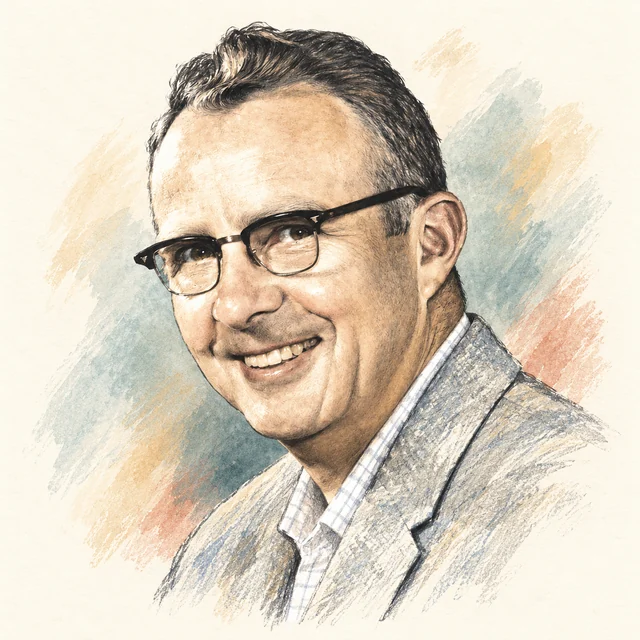
Illustrated portrait of Luis Walter Alvarez

Luis Walter Alvarez

Prize share · 1

Alvarez developed hydrogen bubble-chamber techniques and data analysis that enabled discoveries of particle resonance states. He received the full Physics Prize.

Read the biography ↗

03 · Years in the making

The path here

  1. 1936

    Alvarez joins Berkeley’s Radiation Laboratory.

  2. 1947

    The Berkeley proton linear accelerator is completed.

  3. 1950s

    His group develops large liquid-hydrogen chambers and photograph analysis.

  4. 1960

    The ceremony records an early short-lived resonance discovery.

  5. 1968

    He receives the Physics Prize.

04 · Read further

From the original sources

Original explanations by Curionode, based on the official records below. Biographical details and affiliations refer to the award year.

  1. Official award summary nobelprize.org
  2. Award ceremony speech nobelprize.org
  3. Bubble chamber original abstract (1955) journals.aps.org
  4. Berkeley Lab historical exhibit www2.lbl.gov
  5. Official biography: Luis Walter Alvarez nobelprize.org