c.curionodeThe Nobel Archive

1970 · Physics

Two ways to understand magnetic behaviour

Alfvén explained interactions between conducting matter and magnetic fields. Néel explained opposing magnetic order within solids. Their separate contributions shared the 1970 Physics Prize.

Plasma physicsMagnetic orderFerrimagnetism
1970Physics

Visual guide

The prize, pictured

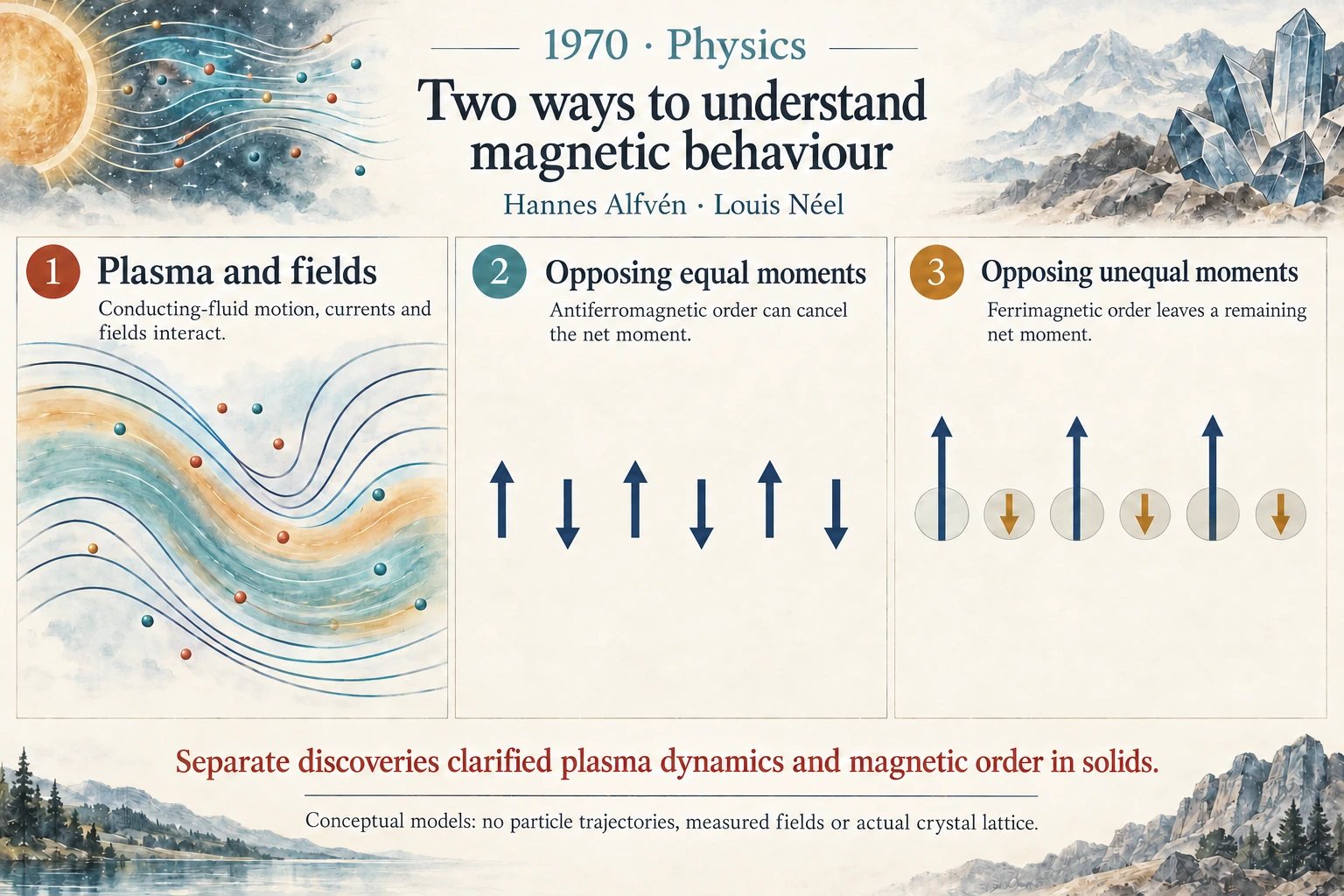
Infographic explaining Two ways to understand magnetic behaviour
Original AI-generated infographic. A conceptual overview; the explanations and sources below provide context.
Read the poster text

Separate discoveries clarified plasma dynamics and magnetic order in solids.

  1. Plasma and fields

    Conducting-fluid motion, currents and fields interact.

  2. Opposing equal moments

    Antiferromagnetic order can cancel the net moment.

  3. Opposing unequal moments

    Ferrimagnetic order leaves a remaining net moment.

Conceptual models: no particle trajectories, measured fields or actual crystal lattice.

01 · The discovery

The idea, in everyday language

A plasma contains charged particles and can conduct electric current. Alfvén examined how fluid motion, currents and fields influence one another, developing magnetohydrodynamics and the waves associated with his name. This brought useful physical tools to problems in space and in laboratory plasmas.

Néel investigated magnetic order inside crystals. In an ideal antiferromagnetic description, equal opposing sublattice contributions cancel the net moment while microscopic order remains. In a ferrimagnet, unequal opposing contributions leave a net moment. These models helped explain ferrites and other solid-state behaviour.

Why it matters

Magnetohydrodynamics became useful in astrophysics and the study of plasma stability. Néel’s models clarified magnetic materials with applications in memory and high-frequency technology. These were different research programmes, each recognised with half the prize.
02 · The people

Who brought the idea to life?

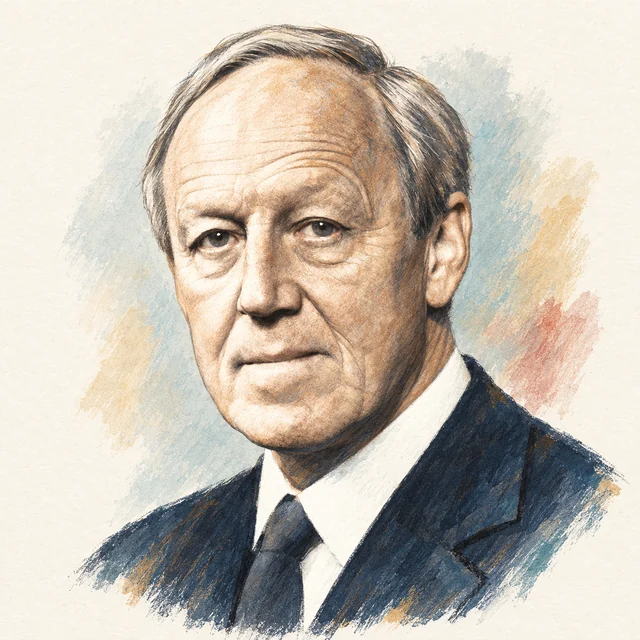
Illustrated portrait of Hannes Alfvén

Hannes Alfvén

Prize share · 1/2

Alfvén developed fundamental magnetohydrodynamic work with applications across plasma physics. He received half the Physics Prize.

Read the biography ↗
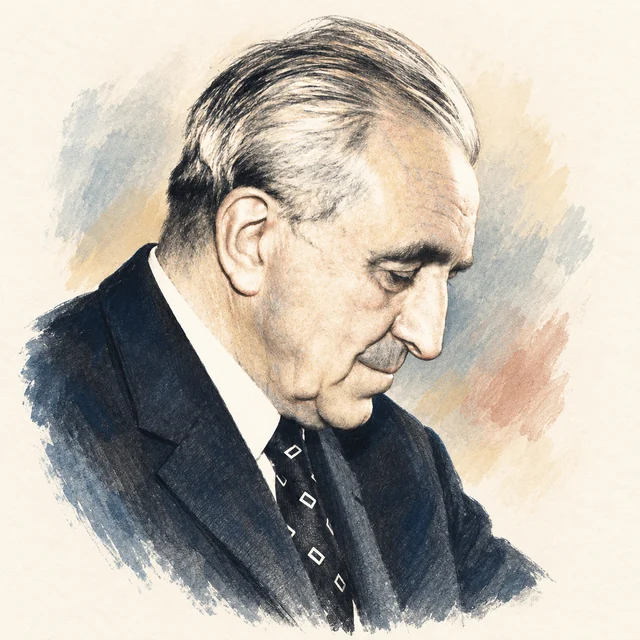
Illustrated portrait of Louis Néel

Louis Néel

Prize share · 1/2

Néel developed fundamental descriptions of antiferromagnetism and ferrimagnetism with important solid-state applications. He received half the Physics Prize.

Read the biography ↗

03 · Years in the making

The path here

  1. 1932

    Néel develops early antiferromagnetic work and completes his doctorate.

  2. 1940

    Alfvén becomes a professor at the Royal Institute of Technology.

  3. 1940s

    Néel develops his account of ferrimagnetic materials.

  4. 1963

    Alfvén becomes professor of plasma physics.

  5. 1970

    Alfvén and Néel each receive half the Physics Prize.

04 · Read further

From the original sources

Original explanations by Curionode, based on the official records below. Biographical details and affiliations refer to the award year.

  1. Official award summary nobelprize.org
  2. Award ceremony speech nobelprize.org
  3. Official biography: Hannes Alfvén nobelprize.org
  4. Official biography: Louis Néel nobelprize.org