A life in context
The person behind the prize
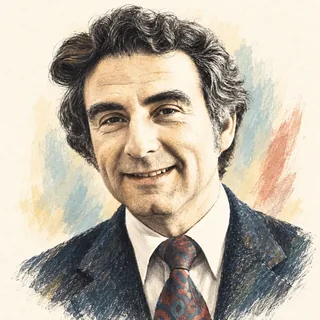
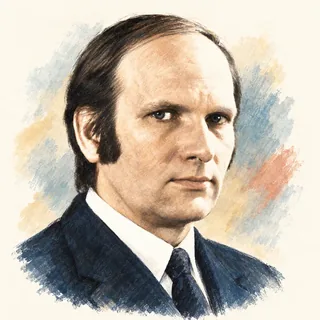
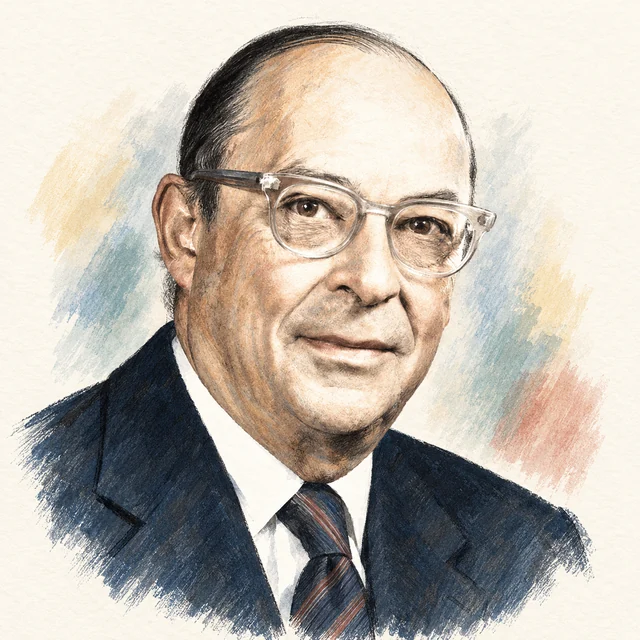
Bardeen trained in electrical engineering at Wisconsin before industrial work in geophysics drew him toward theoretical research. He completed a Princeton doctorate in 1936, with solid-state physics becoming a central interest. After teaching at Minnesota and wartime work at the Naval Ordnance Laboratory, he joined Bell Laboratories. Research there on semiconductors and the transistor brought a first Physics Prize in 1956, shared with Brattain and Shockley. He moved to Illinois in 1951. With Leon Cooper and graduate student Robert Schrieffer, he developed the 1957 theory of superconductivity known as BCS. The second prize recognised this different achievement. Its microscopic description connected pairing and a collective quantum state with the properties of conventional superconductors. His 1956 transistor research and 1972 superconductivity theory were distinct recognised achievements.
The contribution
Bardeen developed the BCS theory with Cooper and Schrieffer, bringing a microscopic physical framework to superconductivity. He received one third of the Physics Prize.
The idea in plain language
In the lattice-based mechanism described by the 1972 announcement, electron interactions with crystal vibrations can provide an effective attraction. Cooper’s 1956 model showed how a bound pair could arise above a filled Fermi sea. A pair here is a quantum correlation, not two charged balls glued together or a tiny isolated molecule.
Read the full award story ↗