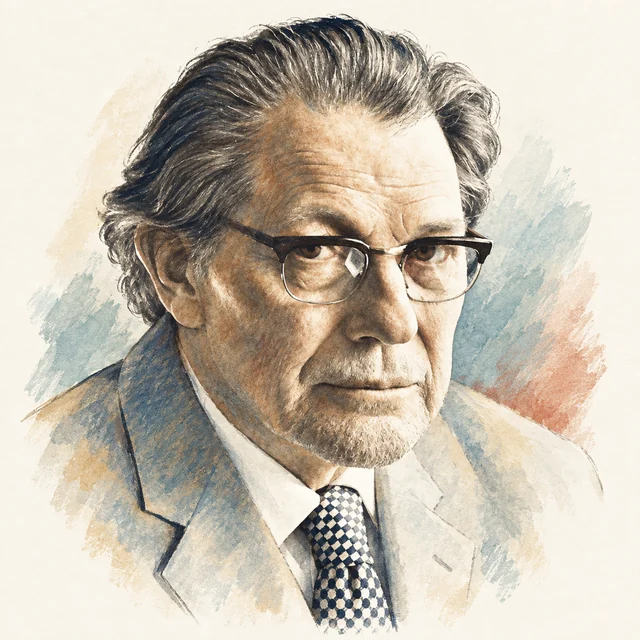
A life in context
The person behind the prize
Martinson experienced an unsettled childhood after his father died and his mother left for the United States. Foster homes, institutions and repeated escapes shaped his early life. At sixteen he went to sea, spending years aboard ships and working abroad before turning increasingly to writing. His prose and poetry drew on life as a sailor and wanderer, childhood memories and close observation of nature. The novel Vägen till Klockrike explored the tensions between settled life and wandering. Aniara, published in 1956, imagined a spacecraft that loses its course and turned the voyage into a meditation on human vulnerability and the treatment of Earth. He became a member of the Swedish Academy in 1949. The 1974 award recognised the reach of his language and imagination across a body of work; Aniara is fiction, not a scientific prediction.
The contribution
Martinson connected small details of the natural world with questions about human life, technology and the cosmos. He received half the Literature Prize.
The idea in plain language
Johnson transformed memories of working-class youth into fiction, then widened his perspective across Europe and historical periods. The Olof novels drew on a young worker’s experience; the wartime Krilon trilogy challenged coercion through allegory. Historical novels such as The Days of His Grace examined power and moral choice in settings distant from the present, while making their dilemmas recognisable. Historical distance became a way to question the reader’s own time.
Read the full award story ↗