A life in context
The person behind the prize
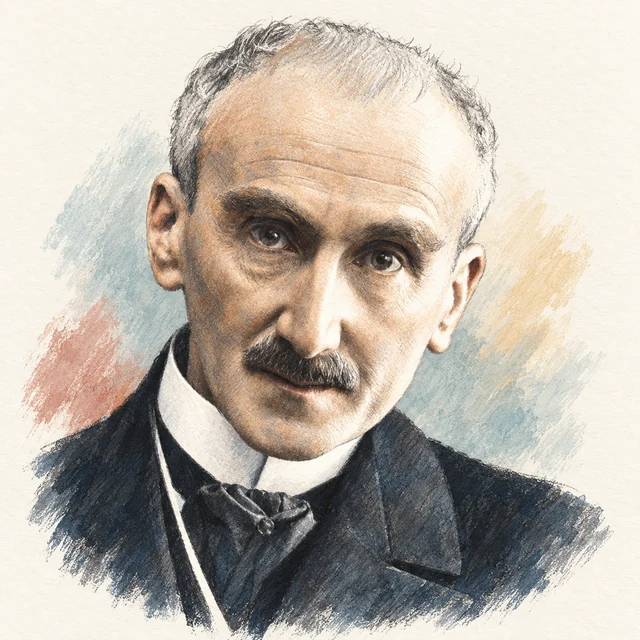
Bergson studied philosophy at the École Normale Supérieure after schooling at the Lycée Condorcet. He taught in secondary schools before joining the École Normale in 1898 and holding a chair at the Collège de France from 1900 to 1921. Time and Free Will, published in 1889, explored consciousness and lived duration; Matter and Memory followed in 1896, and Creative Evolution in 1907. His arguments used images, analogies and sustained prose to make philosophical problems vivid. The Literature Prize recognized both his ideas and the skill of their presentation, rather than a career as a novelist. He entered the Académie française in 1914 and later chaired the League of Nations’ intellectual-cooperation commission. His full prize was for 1927 but was announced and presented in 1928, separately from Undset’s 1928 award. The Two Sources of Morality and Religion appeared later, in 1932. Bergson opposed the Vichy regime before his death in Paris in 1941.
The contribution
Bergson received the full 1927 Literature Prize, awarded in 1928, for his philosophical ideas and their literary presentation. He made duration, memory and creative change subjects of vivid, influential prose.
The idea in plain language
A clock divides time into countable intervals. Bergson asked what such a division leaves out of experience: the way moments carry memories, acquire different qualities and form a changing whole. His concept of duration described lived continuity, rather than another unit for a clock to measure.
Read the full award story ↗

