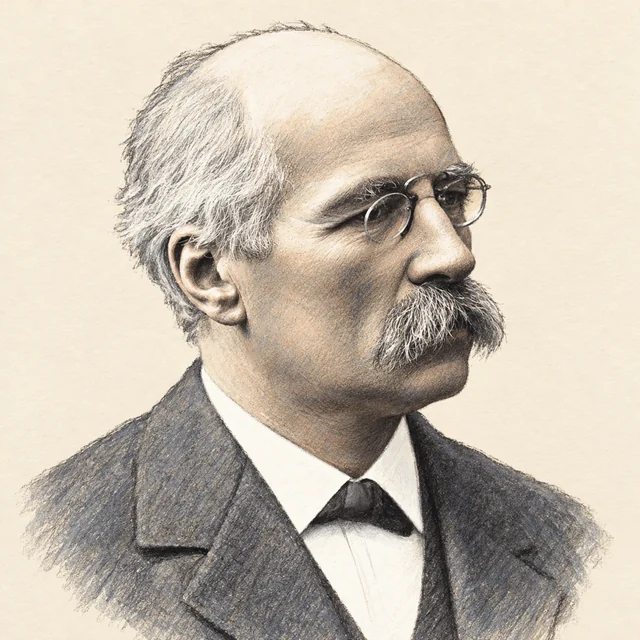
A life in context
The person behind the prize
Henri La Fontaine studied law in Brussels and became counsel at its Court of Appeal in 1877. His career combined legal practice, teaching, political reform and organising the international peace movement. He became secretary-general of the Belgian society for arbitration and peace in 1889 and, from 1895, served several periods in the Belgian Senate. His interests included education, labour reform and women’s rights. With Paul Otlet, and with assistance from Léonie La Fontaine, he developed institutions for organising and sharing knowledge, beginning with the international bibliography project in 1895. Documentation was part of a larger belief that international cooperation needed enduring organisations and access to reliable information. He compiled work on arbitration and helped connect international associations. In 1907 he became president of the International Peace Bureau, a post he held until his death. The 1913 Peace Prize recognised his contribution to organised peaceful internationalism. He was absent from the award ceremony and did not deliver a Nobel lecture; the published presentation is translated from a newspaper report. During the First World War he lived in exile in Britain and the United States. He later joined the Belgian delegation at the Paris Peace Conference and participated in the League of Nations. These post-war activities followed the Nobel award. He died in Brussels in 1943, during the second German occupation of Belgium.
The contribution
La Fontaine received the full Peace Prize for building the organisation of peaceful internationalism. Legal advocacy, arbitration, parliamentary cooperation, the International Peace Bureau and documentary institutions were connected parts of his work.
The idea in plain language
A peace movement needs more than a single appeal. La Fontaine worked to give international cooperation durable forms: arbitration proposals, meetings of parliamentarians, organised peace congresses and the International Peace Bureau, which he led from 1907. These connected legal ideas with people and organisations capable of carrying them forward.
Read the full award story ↗

