c.curionodeThe Nobel Archive

1913 · Peace

Organise peaceful international cooperation

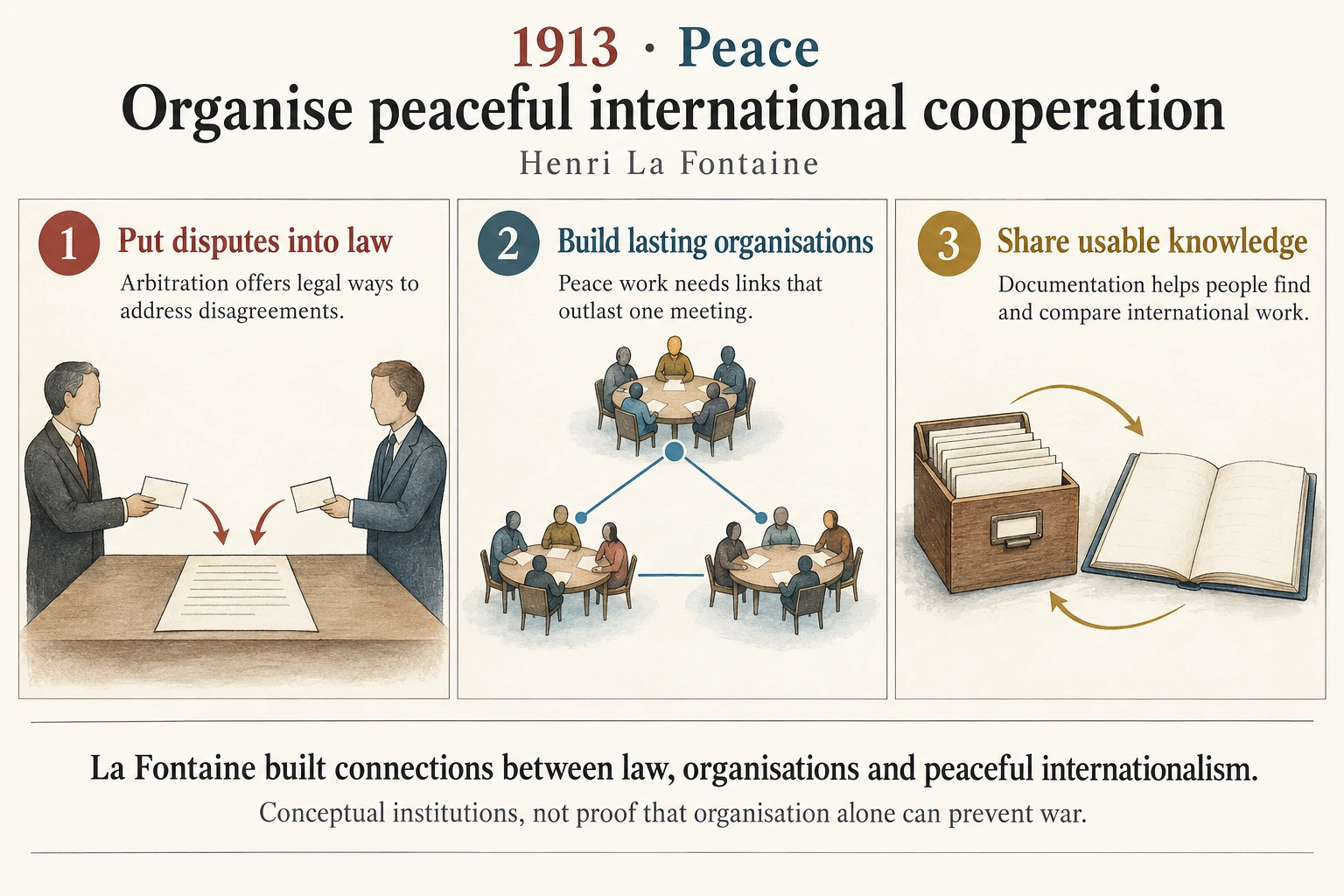
La Fontaine linked law, parliamentary work and lasting organisations with the practical work of peace. Documentation and exchange of information were part of his internationalism.

InternationalismArbitrationPeace organisations
1913Peace

Visual guide

The prize, pictured

Infographic explaining Organise peaceful international cooperation
Original AI-generated infographic. A conceptual overview; the explanations and sources below provide context.
Read the poster text

La Fontaine built connections between law, organisations and peaceful internationalism.

  1. Put disputes into law

    Arbitration offers legal ways to address disagreements.

  2. Build lasting organisations

    Peace work needs links that outlast one meeting.

  3. Share usable knowledge

    Documentation helps people find and compare international work.

Conceptual institutions, not proof that organisation alone can prevent war.

01 · The contribution

The idea, in everyday language

A peace movement needs more than a single appeal. La Fontaine worked to give international cooperation durable forms: arbitration proposals, meetings of parliamentarians, organised peace congresses and the International Peace Bureau, which he led from 1907. These connected legal ideas with people and organisations capable of carrying them forward.

With Paul Otlet, assisted by Léonie La Fontaine, he also developed a project for organising published knowledge. Bibliographies, documentation and links among international associations could help people find and compare work across borders. The 1913 Peace Prize recognised his contribution to organised peaceful internationalism. It did not mean that the institutions could by themselves prevent the wars that followed.

Why it matters

La Fontaine helped make the peace movement an organised international activity with legal and documentary resources. His work connected practical administration with a long-term belief in cooperation, equality and the peaceful settlement of disputes.
02 · The people

Who brought the idea to life?

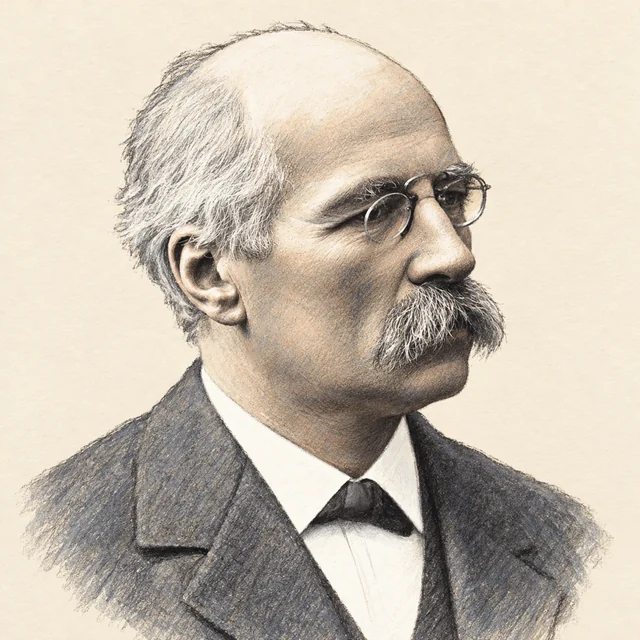
Illustrated portrait of Henri La Fontaine

Henri La Fontaine

Prize share · 1

La Fontaine received the full Peace Prize for building the organisation of peaceful internationalism. Legal advocacy, arbitration, parliamentary cooperation, the International Peace Bureau and documentary institutions were connected parts of his work.

Read the biography ↗

03 · Years in the making

The path here

  1. 1854

    La Fontaine is born in Brussels.

  2. 1877

    He becomes counsel at the Brussels Court of Appeal.

  3. 1889

    He becomes secretary-general of the Belgian society for arbitration and peace.

  4. 1895

    He begins Senate service and the bibliography project with Otlet.

  5. 1907

    He becomes president of the International Peace Bureau.

  6. 1913

    He receives the full Peace Prize.

  7. 1943

    He dies in Brussels.

04 · Read further

From the original sources

Original explanations by Curionode, based on the official records below. Biographical details and affiliations refer to the award year.

  1. Official award summary nobelprize.org
  2. Historical presentation account nobelprize.org
  3. Mundaneum: the founders and their archives mundaneum.org