A life in context
The person behind the prize
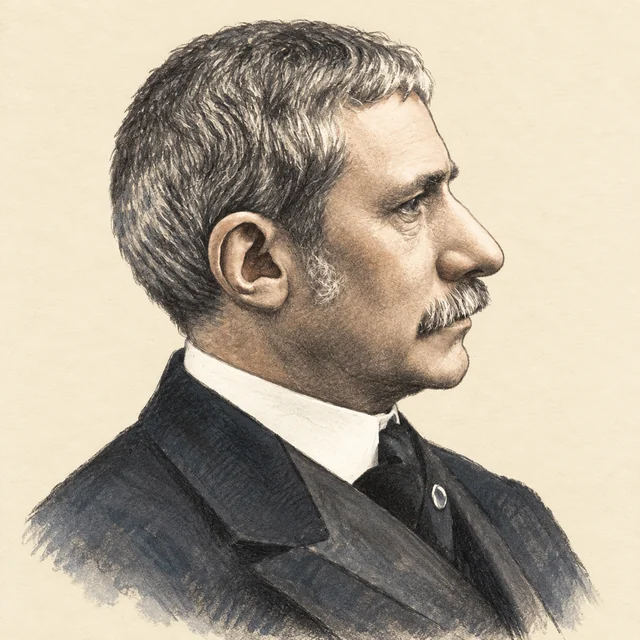
Elihu Root graduated from Hamilton College in 1864 and New York University’s law school in 1867, then built a successful legal practice. He served as Secretary of War from 1899 to 1904 and Secretary of State from 1905 to 1909. His work helped administer United States control over territories acquired after the Spanish-American War; the Nobel facts account explicitly connects this policy with racial paternalism and imperial power. As Secretary of State he also sought improved relations with Latin American governments, toured South America in 1906 and promoted arbitration agreements. These strands of his career should be considered together rather than describing him as an uncomplicated pacifist. A senator from 1909 to 1915, he became the first president of the Carnegie Endowment for International Peace in 1910. His reserved 1912 Peace Prize was announced on 10 December 1913; he was absent from that ceremony. The published presentation is a translation of a newspaper report. After the First World War he helped develop plans for the Permanent Court of International Justice. These later activities followed the prize, and he did not found the United Nations. He died in New York in 1937.
The contribution
Root received the full Peace Prize for work on relations between the Americas and international arbitration agreements. The award belonged to 1912 but was reserved and announced in 1913; his legal internationalism coexisted with service in an expansionist United States government.
The idea in plain language
When governments disagree, an agreed legal procedure offers another route besides threats or force. Root promoted arbitration treaties and supported international arrangements for hearing disputes. As Secretary of State he also sought closer diplomatic relations with Latin American governments, including his South American tour of 1906 and support for the 1907 Central American peace conference.
Read the full award story ↗

