A life in context
The person behind the prize
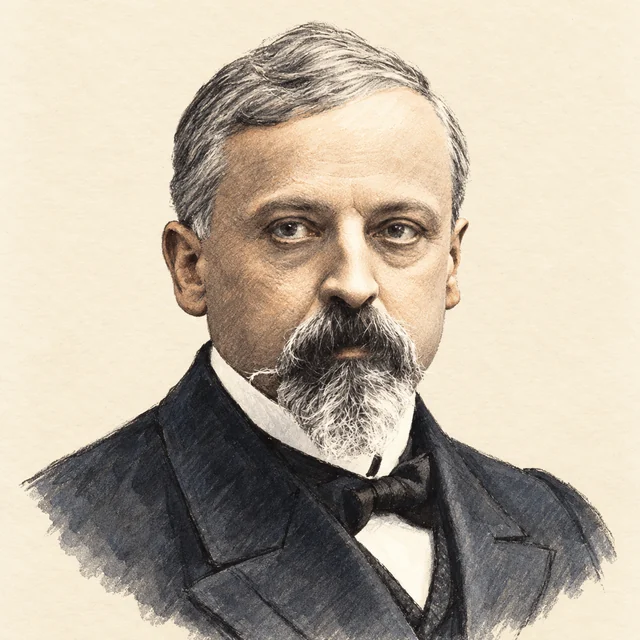
Henryk Sienkiewicz grew up in a Polish landowning family of reduced means during the partitions of Poland. He studied in Warsaw without completing a degree, then worked as a journalist, columnist and correspondent. Travel in North America from 1876 to 1878 produced reports and experiences that informed later fiction. His short stories explored poverty, frustrated talent, emigration and attachment to a homeland. Historical novels brought a larger readership. The trilogy beginning with With Fire and Sword in 1884 transformed seventeenth-century conflicts into expansive narratives of danger, loyalty, humour and personal courage. Research supplied a historical setting, while invented characters and episodes gave events their emotional shape. Written for readers living without an independent Polish state, these books connected storytelling with the preservation of national memory. Quo vadis, serialised in 1895–1896 and published in book form in 1896, reached an international audience through its story of early Christians in Nero’s Rome. The Knights of the Cross followed in 1900. A public subscription also bought Sienkiewicz the estate at Oblęgorek that year; it was a purchased national gift, rather than the ancestral castle sometimes described in brief biographies. The full 1905 Literature Prize honoured his merits as an epic writer across his authorship, not Quo vadis alone. He attended the Stockholm ceremony. His historical imagination should be read as literature with national and religious perspectives, rather than an impartial documentary account of every people in the conflicts depicted. During the First World War, living in Switzerland, he worked with Ignacy Jan Paderewski on relief for war victims in Poland. He died at Vevey in 1916. His career joined newspaper serialisation, popular narrative art and public service, helping literary memory cross the borders imposed on his country.
The contribution
Sienkiewicz received the full Literature Prize for his achievement as an epic writer. The recognition embraced a wider body of historical fiction and narrative art, rather than one famous novel alone.
The idea in plain language
The trilogy beginning with With Fire and Sword combines historical events with invented lives. Characters experience danger, love, divided loyalties and changes of fortune, giving a long account of public events a sequence of personal stakes.
Read the full award story ↗

