A life in context
The person behind the prize
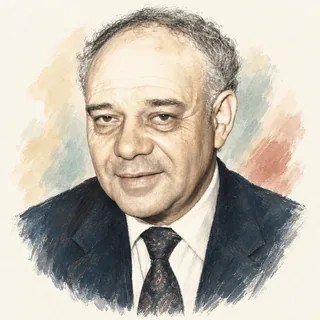
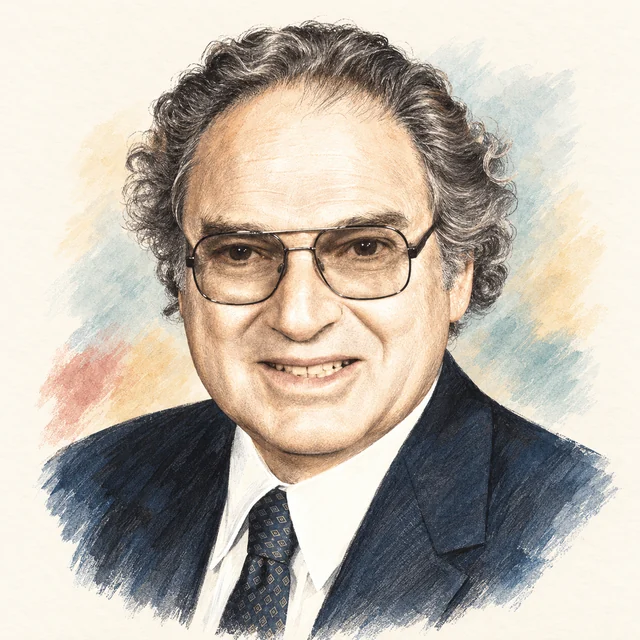
Hauptman studied mathematics at City College of New York, graduating in 1937, and earned a Columbia master’s degree in 1939. After wartime service, he joined the Naval Research Laboratory in 1947 and began working with Jerome Karle. He also pursued a Maryland doctorate in mathematics. Their partnership combined mathematical reasoning with physical chemistry to address the crystallographic phase problem. A joint monograph appeared in 1953, followed by extensions and practical applications. Hauptman moved to the Medical Foundation of Buffalo in 1970 and became its research director in 1972, continuing crystallographic research with a wider team.
The contribution
Hauptman developed mathematical and statistical relationships that allow phases to be inferred from X-ray diffraction intensities under structural constraints. Together with Karle, he established central foundations of crystallographic direct methods. These methods help reconstruct electron-density maps and determine molecular structures; they do not directly photograph atoms or guarantee a solution from every dataset. He received one half of the Chemistry Prize.
The idea in plain language
X-rays scattered by a crystal make a diffraction pattern. Detectors measure the intensities of the spots, which tell us about the magnitudes of scattered waves. A reconstruction also needs their relative phases, information usually absent from those intensity measurements. This is the crystallographic phase problem.
Read the full award story ↗