A life in context
The person behind the prize
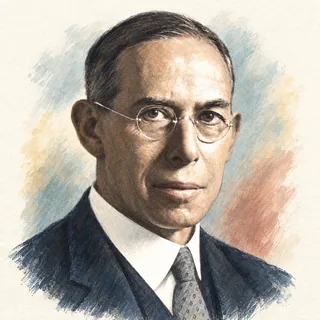
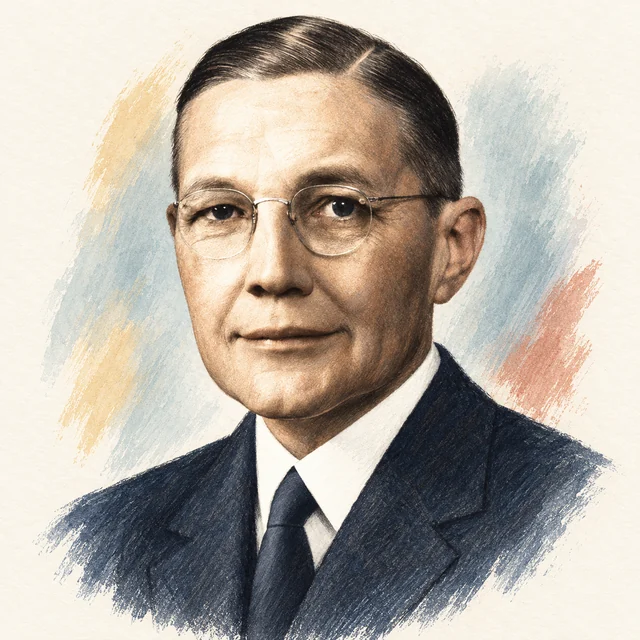
Gasser studied at Wisconsin, receiving his bachelor’s degree in 1910 and master’s in 1911, and obtained his medical degree at Johns Hopkins in 1915. He joined Washington University in St Louis in 1916, becoming professor of pharmacology in 1921. There he collaborated with Joseph Erlanger on the electrical activity of nerves and on recording techniques able to resolve very rapid changes. Signals from a bundle could contain components travelling at different speeds; separating them revealed important differences among its fibres. Their investigations also considered properties beyond speed, connecting electrical behaviour with physiological function. Gasser became professor at Cornell in New York in 1931 and director of the Rockefeller Institute for Medical Research in 1935. Electrical Signs of Nervous Activity, written with Erlanger, appeared in 1937. He received one half of the 1944 Medicine Prize while directing the Rockefeller institute in New York, whereas Erlanger remained at Washington University. These were distinct award affiliations, not a shared appointment.
The contribution
Gasser collaborated with Erlanger to resolve components of nerve activity and investigate functional differences among fibres. He received one half of the Medicine Prize.
The idea in plain language
A nerve bundle contains many fibres. Recording from the bundle can combine their activity into a signal that hides important differences. Erlanger and Gasser improved rapid electrical recording, notably using a cathode-ray oscillograph, to distinguish components arriving at different times.
Read the full award story ↗