A life in context
The person behind the prize
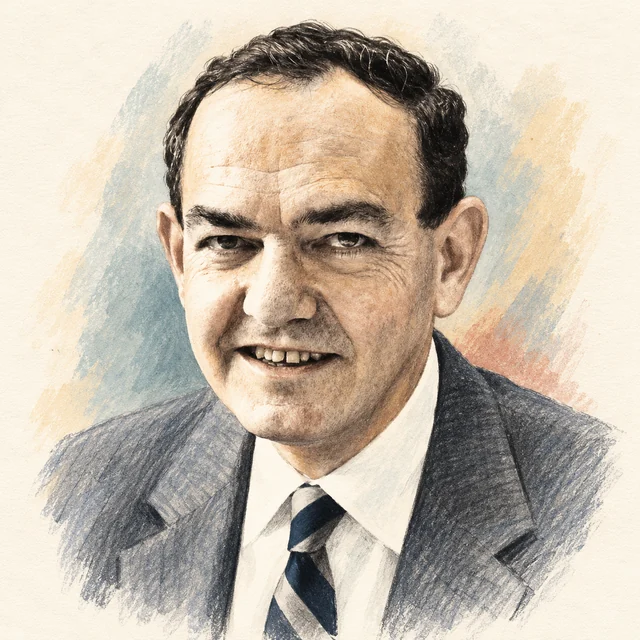
Simon grew up in Milwaukee in a household interested in books, music and public affairs. An economist uncle’s books helped him discover the social sciences. He entered Chicago in 1933, seeking to apply mathematical rigour to human behaviour. Municipal-administration research after his 1936 graduation led him toward organisational decisions; he earned a political-science doctorate in 1943. Administrative Behavior appeared in 1947. In 1949 he joined the institution that became Carnegie Mellon to help develop a new school of industrial administration. With colleagues including James March and Richard Cyert he studied organisations, while collaboration with Allen Newell linked problem solving to computer simulation. His economic work examined how limited information and calculation shape choices. The 1978 memorial prize recognised decision-making research within economic organisations, rather than being an award solely for artificial intelligence.
The contribution
Simon received the full memorial prize for research on decision processes within economic organisations. Bounded rationality and satisficing explain search and choice under limits of knowledge, attention and computation; they do not mean that every imperfect decision is a good one.
The idea in plain language
An organisation divides work, channels information and establishes procedures. These arrangements shape what its members notice and which alternatives they consider. Simon’s bounded rationality asks how a choice can be made when the complete optimisation problem exceeds the decision maker’s practical abilities.
Read the full award story ↗