c.curionodeThe Nobel Archive

1978 · Economic Sciences

Choose with limited knowledge

Decision makers rarely know every option or calculate every consequence. Simon studied how economic organisations actually search, set goals and make choices with limited information, attention and computational capacity.

The Sveriges Riksbank Prize in Economic Sciences in Memory of Alfred Nobel.

Bounded rationalitySatisficingOrganisational decisions
1978Economic Sciences

Visual guide

The prize, pictured

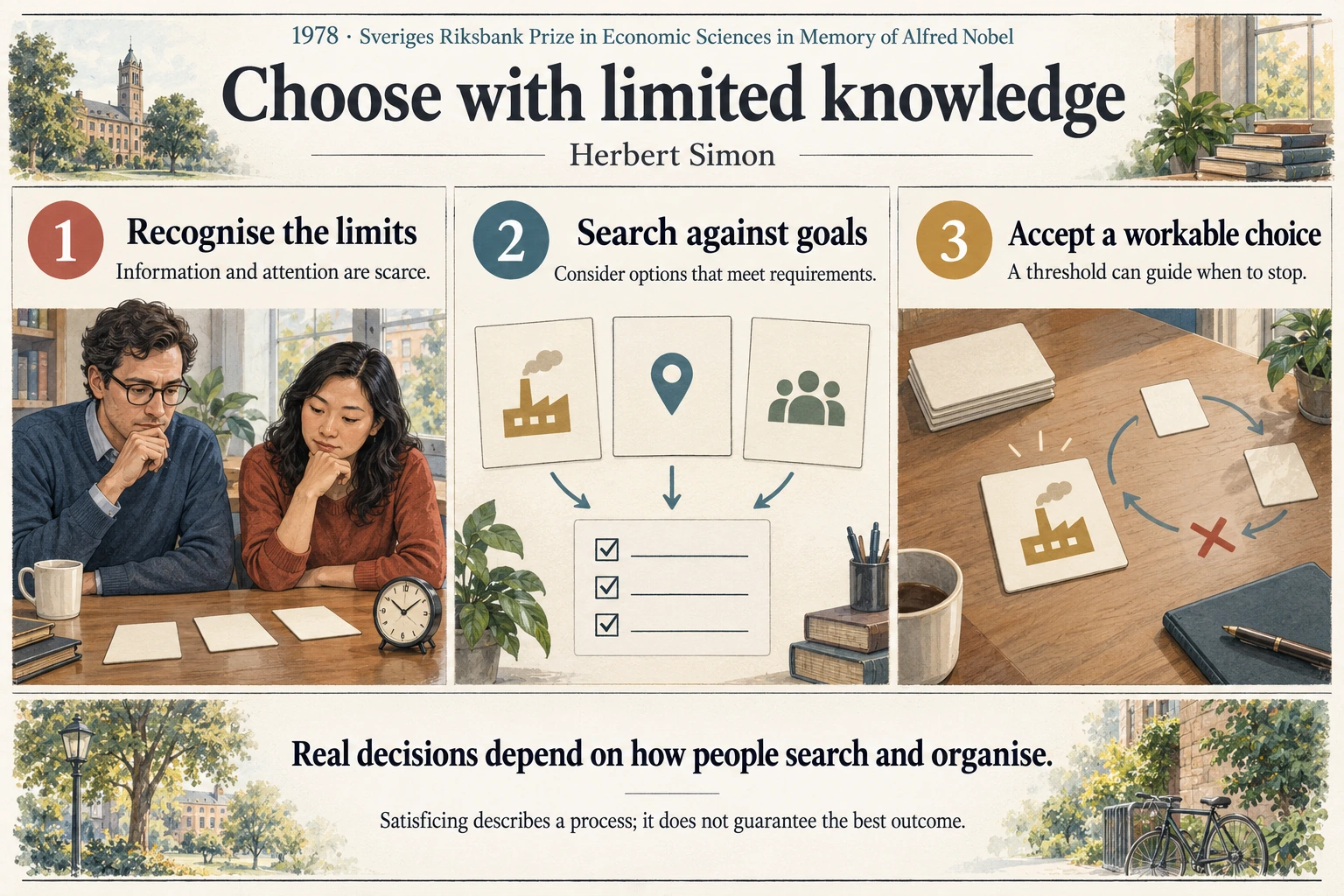
Infographic explaining Choose with limited knowledge
Original AI-generated infographic. A conceptual overview; the explanations and sources below provide context.
Read the poster text

Real decisions depend on how people search and organise.

  1. Recognise the limits

    Information and attention are scarce.

  2. Search against goals

    Consider options that meet requirements.

  3. Accept a workable choice

    A threshold can guide when to stop.

Satisficing describes a process; it does not guarantee the best outcome.

01 · The discovery

The idea, in everyday language

An organisation divides work, channels information and establishes procedures. These arrangements shape what its members notice and which alternatives they consider. Simon’s bounded rationality asks how a choice can be made when the complete optimisation problem exceeds the decision maker’s practical abilities.

One mechanism is satisficing: search for an alternative that meets an aspiration level, then stop when an acceptable option is found. The threshold can change with experience, and search itself takes effort. This explains a process of choice rather than assuming that an actor has already compared every possible outcome.

Why it matters

The research brought observation, psychology and organisational structure into economic accounts of decisions. It helped explain why routines, information systems and the design of an organisation matter alongside prices and incentives.
02 · The people

Who brought the idea to life?

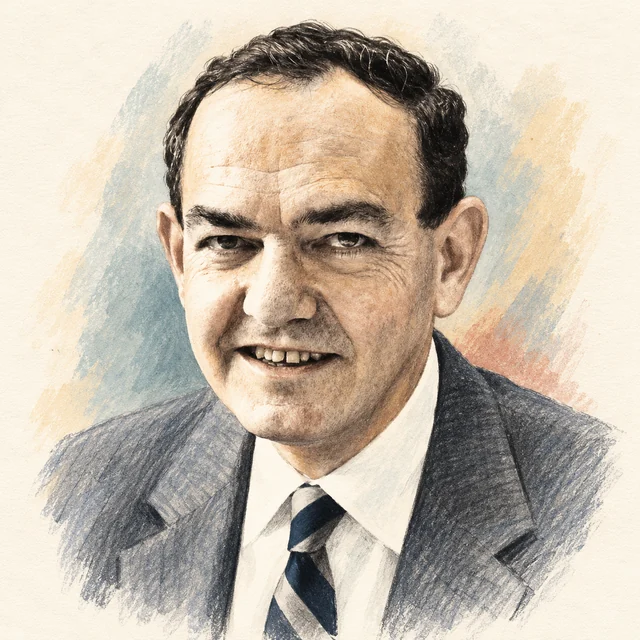
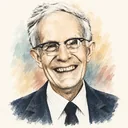
Illustrated portrait of Herbert Simon

Herbert Simon

Prize share · 1

Simon received the full memorial prize for research on decision processes within economic organisations. Bounded rationality and satisficing explain search and choice under limits of knowledge, attention and computation; they do not mean that every imperfect decision is a good one.

Read the biography ↗

03 · Years in the making

The path here

  1. 1936

    Municipal-administration research follows Simon’s graduation.

  2. 1943

    He receives a doctorate in political science.

  3. 1947

    Administrative Behavior is published.

  4. 1949

    He joins Carnegie’s industrial-administration school.

  5. 1955–1956

    Formal work develops search and satisficing models.

  6. 1978

    Organisational decision-making research receives the memorial prize.

04 · Read further

From the original sources

Original explanations by Curionode, based on the official records below. Biographical details and affiliations refer to the award year.

  1. Official announcement nobelprize.org
  2. Simon’s lecture: search and satisficing nobelprize.org

More in Economic Sciences

Browse this subject ↗