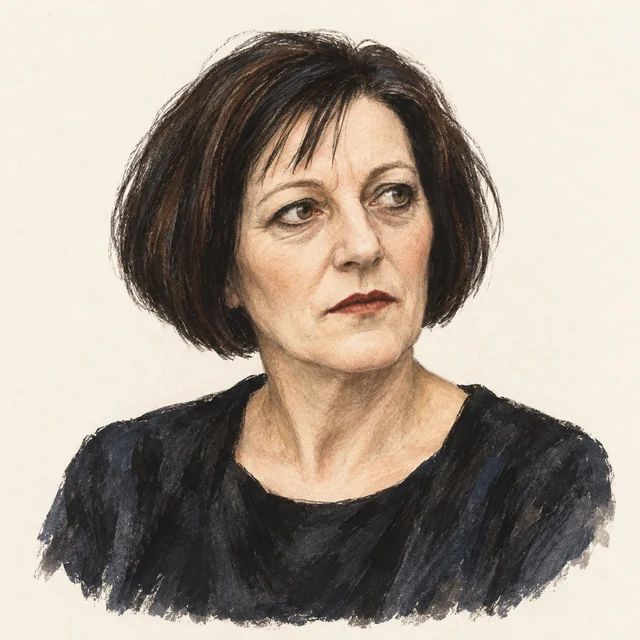
A life in context
The person behind the prize
Müller grew up in Romania’s German-speaking minority and studied German and Romanian literature in Timișoara from 1973 to 1976. She worked as a factory translator but was dismissed after refusing to become an informant for the secret police. Her first story collection, Niederungen, appeared in a censored Romanian edition in 1982 and an uncensored German edition in 1984. She emigrated to Germany in 1987.
The contribution
Her writing turns precise images, ordinary objects and compressed language into a record of vulnerability under oppression. Novels such as The Land of Green Plums explore how surveillance and fear penetrate everyday life; Atemschaukel draws on the history of deportation and forced labour. The prize recognised the artistic force with which she depicts dispossession, not a claim that every fictional detail is autobiography.
The idea in plain language
A dictatorship reaches beyond public speeches and official institutions. It can enter a workplace, a friendship, an ordinary conversation or the feeling of being at home. Müller’s fiction makes that pressure perceptible through sharply observed details and compressed, often startling images. The everyday world becomes unfamiliar because trust and language themselves have been damaged.
Read the full award story ↗

