A life in context
The person behind the prize
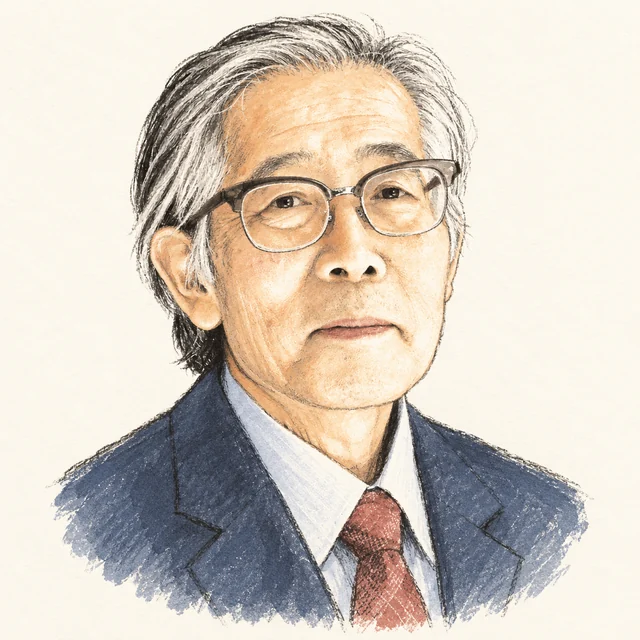
Shirakawa earned his doctorate at the Tokyo Institute of Technology in 1966 and studied how acetylene could be polymerised. An unexpected experimental result led to a way of making polyacetylene as a thin, metallic-looking film. He later collaborated with MacDiarmid and Heeger at Pennsylvania. In 1979 he moved to the University of Tsukuba, where he continued research on polyacetylene and other conducting polymers.
The contribution
Shirakawa developed methods for producing and controlling polyacetylene films, supplying a crucial material for the collaboration. The film’s shiny appearance did not by itself mean it was a good conductor. Chemical doping then changed its electrical properties dramatically. Together, synthesis, chemical treatment and electrical measurements established the importance of conjugated polymers whose conductivity could be altered through the creation of mobile charge carriers.
The idea in plain language
Most familiar plastics are useful electrical insulators. Polyacetylene offered a different possibility: its chain contains alternating single and double bonds, creating a conjugated electronic system. Shirakawa developed ways to make this polymer as a thin film. A metallic-looking surface was intriguing, but appearance alone did not establish good electrical conduction.
Read the full award story ↗