A life in context
The person behind the prize
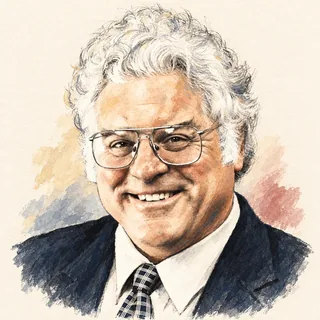
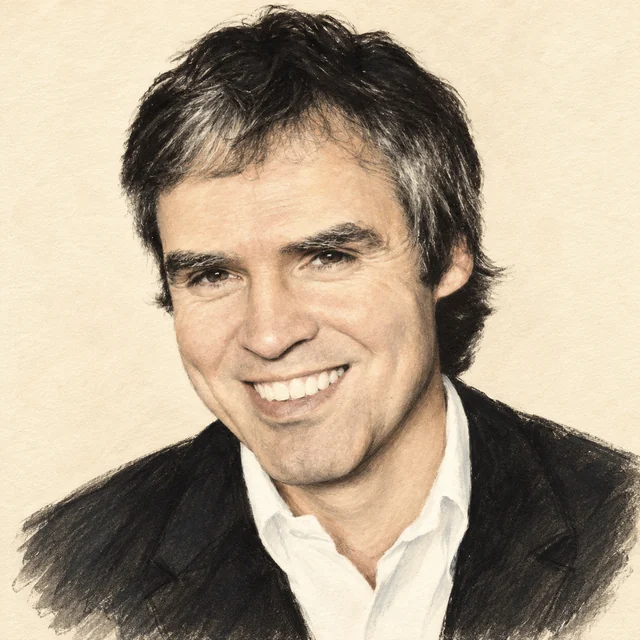
Störmer initially considered architecture before turning to physics in Frankfurt. His doctoral research involved high magnetic fields, and he received his doctorate from Stuttgart in 1977. He then joined Bell Laboratories, where exceptionally clean semiconductor structures made new electron experiments possible. By the award year he held a professorship at Columbia while maintaining a connection with Bell Labs.
The contribution
Störmer helped develop high-mobility two-dimensional electron systems and, with Tsui and collaborators, discovered the fractional quantum Hall effect in 1982. Strong magnetic fields and very low temperatures revealed quantized Hall plateaus beyond the integer pattern. The unexpected result supplied the experimental challenge that Laughlin’s collective-state theory explained.
The idea in plain language
Electrons confined to a nearly two-dimensional layer behave in unexpected ways under strong magnetic fields and very low temperatures. Earlier measurements had found integer quantization of the Hall response. In 1982 Störmer and Tsui, with collaborators, observed plateaus associated with fractional filling of the electronic states. The pattern could not be explained by treating the electrons independently.
Read the full award story ↗