A life in context
The person behind the prize
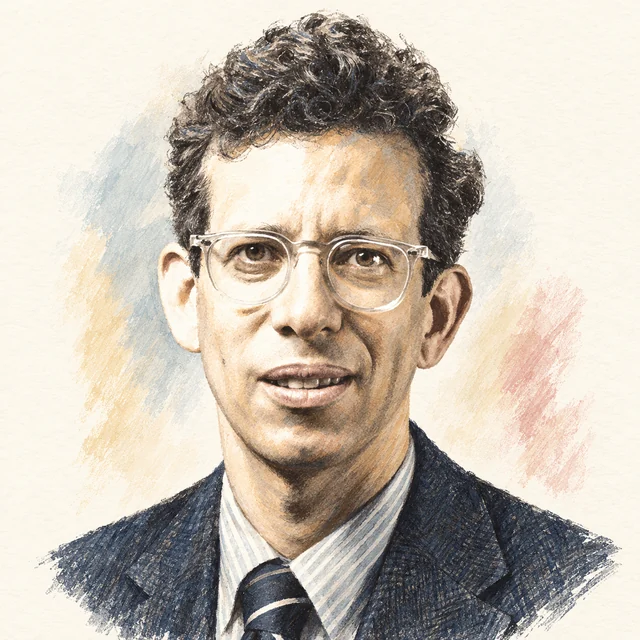
Temin’s interest in research developed during teenage summers at the Jackson Laboratory and Philadelphia’s Institute for Cancer Research. He graduated from Swarthmore in 1955, began embryology at Caltech and switched to animal virology in Dulbecco’s laboratory. Work with Harry Rubin on Rous sarcoma virus led to a doctorate in 1959 and an initial provirus hypothesis. Moving to Wisconsin in 1960, he developed the explicit DNA-provirus hypothesis in 1964: an RNA virus could persist through a DNA intermediate. In 1970, experiments with Satoshi Mizutani identified the enzyme needed to copy RNA into DNA, independently of Baltimore’s discovery. Temin also studied cell-growth regulation and continued tumour-virus research. The story combines a persistent hypothesis with experimental testing, not a conclusion established by persistence alone.
The contribution
Temin developed the DNA-provirus hypothesis and, with Mizutani, discovered reverse transcriptase. He received one third of the Medicine Prize for discoveries concerning viruses and cellular genetic material.
The idea in plain language
Dulbecco and collaborators used cell cultures to study animal viruses quantitatively and investigated DNA tumour viruses such as polyoma virus and SV40. Work on transformed cells showed that viral genetic material could remain associated with the host-cell genome. This helped explain how a temporary infection could have lasting effects on cell behaviour. The finding concerned particular experimental virus–cell systems, not a claim that every cancer has a viral cause.
Read the full award story ↗