c.curionodeThe Nobel Archive

1975 · Physiology or Medicine

A route from viral RNA to DNA

Tumour-virus research connected infection with cellular genetic material. DNA-virus studies and the independent discovery of reverse transcriptase revealed different parts of that connection.

Reverse transcriptionTumour virusesCellular genetics
1975Physiology or Medicine

Visual guide

The prize, pictured

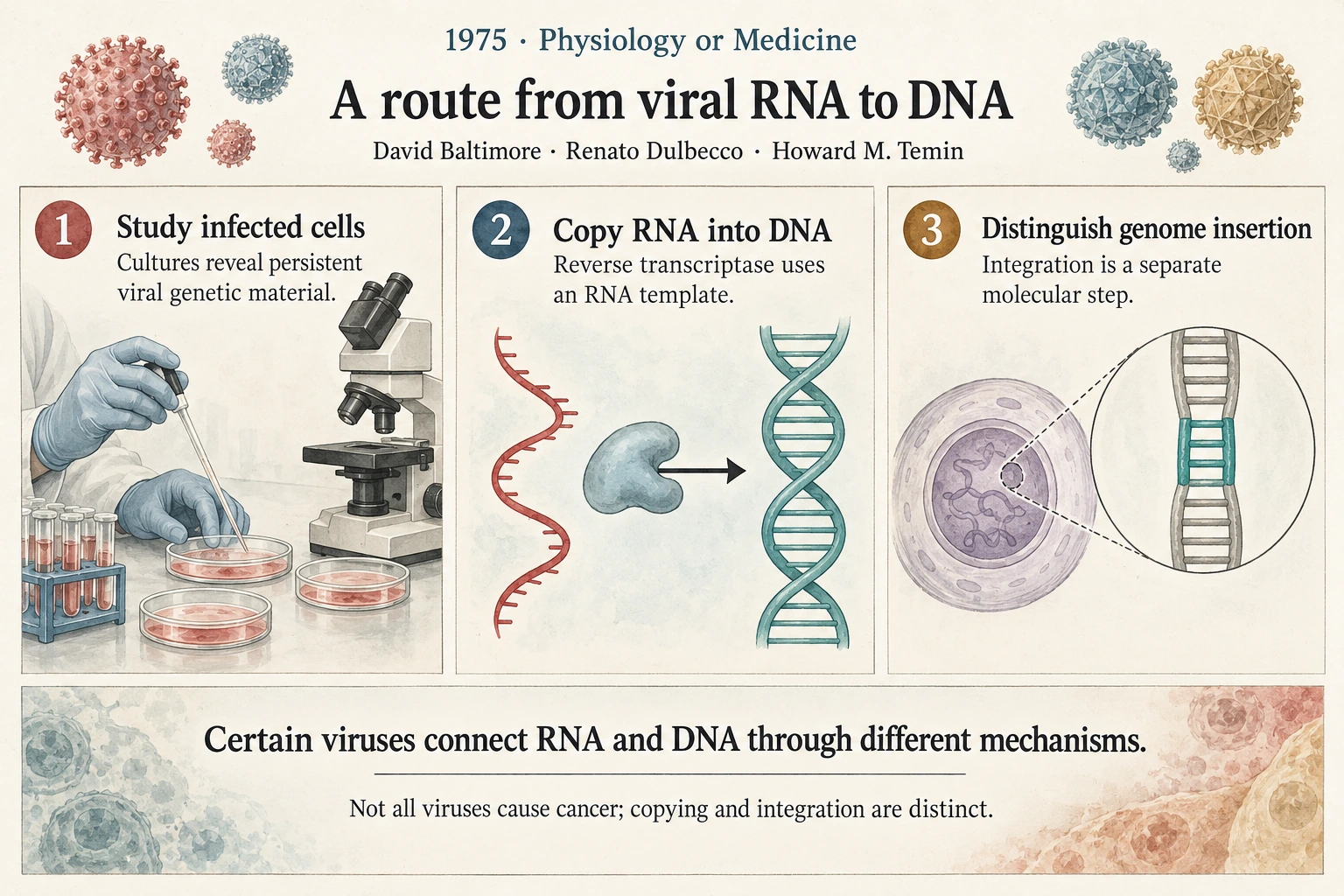
Infographic explaining A route from viral RNA to DNA
Original AI-generated infographic. A conceptual overview; the explanations and sources below provide context.
Read the poster text

Certain viruses connect RNA and DNA through different mechanisms.

  1. Study infected cells

    Cultures reveal persistent viral genetic material.

  2. Copy RNA into DNA

    Reverse transcriptase uses an RNA template.

  3. Distinguish genome insertion

    Integration is a separate molecular step.

Not all viruses cause cancer; copying and integration are distinct.

01 · The discovery

The idea, in everyday language

Dulbecco and collaborators used cell cultures to study animal viruses quantitatively and investigated DNA tumour viruses such as polyoma virus and SV40. Work on transformed cells showed that viral genetic material could remain associated with the host-cell genome. This helped explain how a temporary infection could have lasting effects on cell behaviour. The finding concerned particular experimental virus–cell systems, not a claim that every cancer has a viral cause.

Temin’s DNA-provirus hypothesis proposed a DNA intermediate for an RNA tumour virus. In 1970, Temin with Satoshi Mizutani and, independently, Baltimore identified reverse transcriptase: an enzyme that uses RNA as a template to synthesise DNA. Copying RNA into DNA and inserting viral DNA into a cell’s genome are distinct steps with different molecular machinery. The result expanded the familiar DNA-to-RNA-to-protein picture. It did not refute Crick’s original central dogma, which concerned sequence information leaving protein and had allowed the possibility of RNA-to-DNA transfer. The three laureates each received one third.

Why it matters

The discoveries gave researchers a molecular route linking certain RNA viruses with stable DNA forms and clarified interactions between viruses and cells. Reverse transcription later became a widely used research tool for studying RNA through DNA copies. The award concerned fundamental mechanisms, not a universal cancer cure.
02 · The people

Who brought the idea to life?

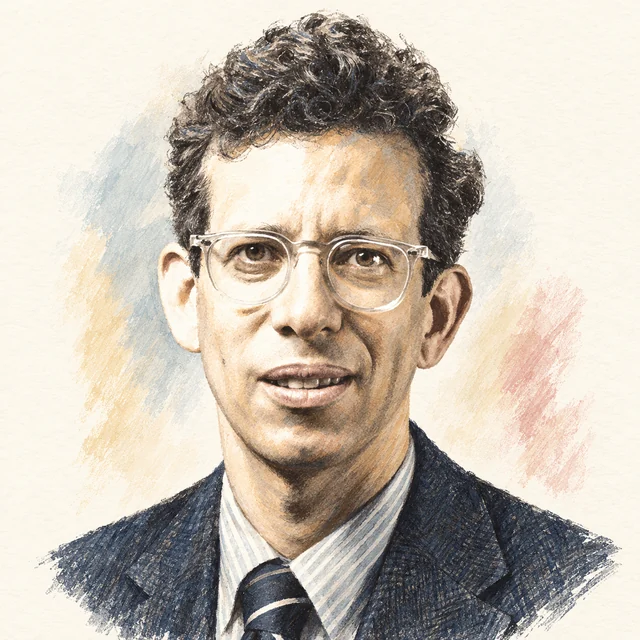
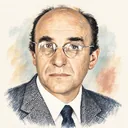
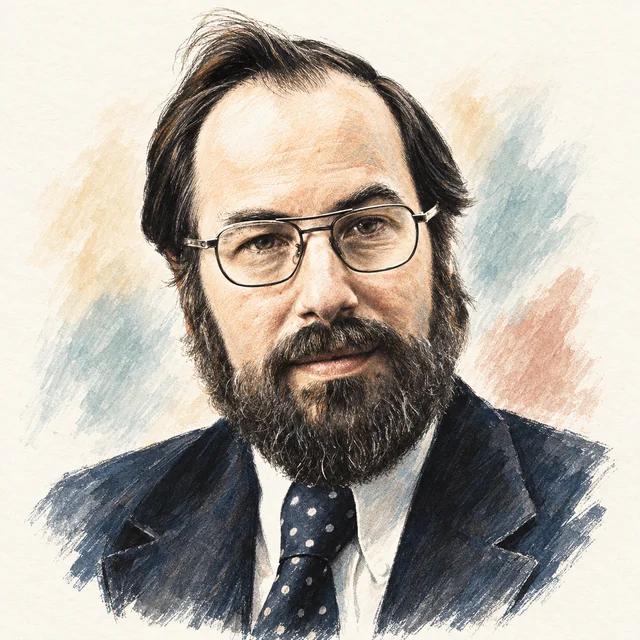
Illustrated portrait of David Baltimore

David Baltimore

Prize share · 1/3

Baltimore independently discovered reverse transcriptase, showing that viral RNA can serve as a template for DNA synthesis. He received one third of the Medicine Prize alongside Dulbecco and Temin.

Read the biography ↗
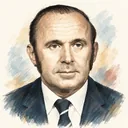
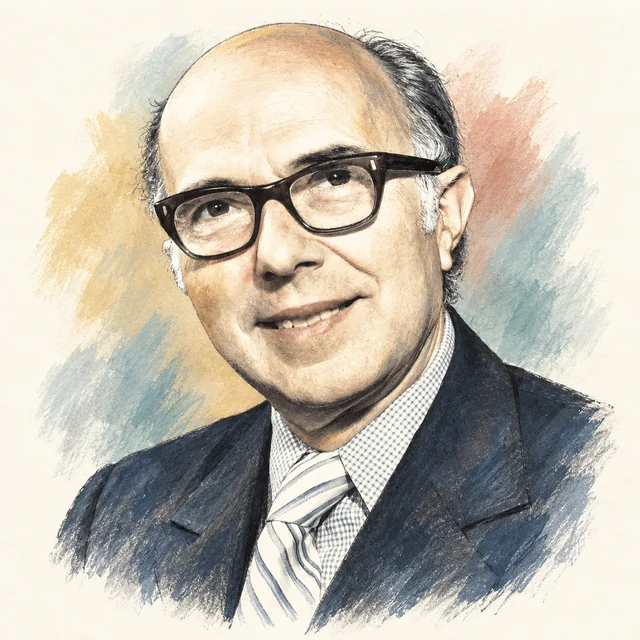
Illustrated portrait of Renato Dulbecco

Renato Dulbecco

Prize share · 1/3

Dulbecco’s research showed how DNA tumour viruses can leave genetic material in transformed cells. He received one third of the Medicine Prize, with Baltimore and Temin recognised for reverse transcription in RNA viruses.

Read the biography ↗
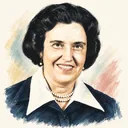
Illustrated portrait of Howard M. Temin

Howard M. Temin

Prize share · 1/3

Temin developed the DNA-provirus hypothesis and, with Mizutani, discovered reverse transcriptase. He received one third of the Medicine Prize for discoveries concerning viruses and cellular genetic material.

Read the biography ↗

03 · Years in the making

The path here

  1. 1958

    Dulbecco begins work on polyoma virus; Temin studies tumour viruses in his laboratory.

  2. 1959

    Temin’s early provirus hypothesis follows his Caltech doctorate.

  3. 1964

    Temin formulates the explicit DNA-provirus hypothesis.

  4. 1970

    Independent experiments establish RNA-directed DNA synthesis.

  5. 1975

    Dulbecco, Baltimore and Temin receive equal shares of the Medicine Prize.

04 · Read further

From the original sources

Original explanations by Curionode, based on the official records below. Biographical details and affiliations refer to the award year.

  1. Official announcement nobelprize.org
  2. Crick: original central-dogma clarification dna.caltech.edu
  3. Temin and Mizutani: original 1970 publication nature.com

More in Physiology or Medicine

Browse this subject ↗