A life in context
The person behind the prize
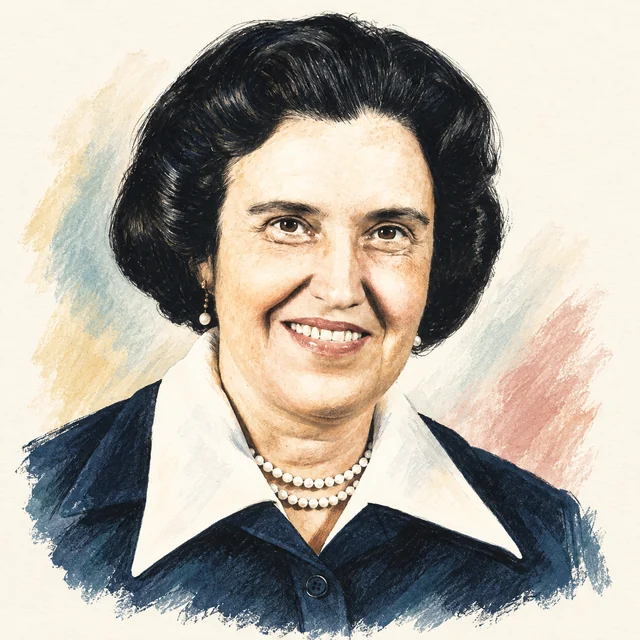
Yalow studied physics at Hunter College and earned a nuclear-physics doctorate at Illinois in 1945, overcoming barriers faced by women entering graduate research. Her experience measuring radioactivity became useful in medical investigation. She joined the Bronx Veterans Administration Hospital part time in 1947 and full time in 1950. A partnership with physician Solomon Berson began that year. Their insulin studies revealed antibodies and suggested a way to measure tiny hormone concentrations by competition between labelled and unlabelled material. The practical insulin radioimmunoassay emerged in 1959 and helped transform endocrine research. Berson died in 1972 and was not a Nobel recipient; his contribution remains essential to the story. Yalow continued research and training young investigators in the laboratory named for him.
The contribution
Yalow developed radioimmunoassays of peptide hormones with Berson, making very small concentrations measurable through controlled competition and calibration. She received one half of the Medicine Prize; the other half recognised separate discoveries by Guillemin and Schally.
The idea in plain language
Guillemin’s and Schally’s teams purified hypothalamic extracts, tested their effects on pituitary tissue and established chemical structures. Identification of TRH in 1969 and LH-RH, now also called GnRH, in 1971 helped turn the proposed brain–pituitary link into specific molecules. Synthesis and biological tests checked the identifications. The hypothalamus is a brain region, not the brainstem; peptide signals can promote or inhibit particular pituitary functions.
Read the full award story ↗