A life in context
The person behind the prize
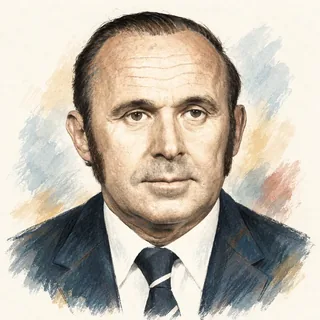
Guillemin studied medicine during the German occupation of France and received his medical degree from Lyon in 1949. Work with Hans Selye in Montreal led to a physiology doctorate in 1953 and an appointment at Baylor in Houston. He investigated how the hypothalamus controls pituitary secretion, searching for chemical signals present in exceptionally small amounts. Schally worked with him at Baylor before the two led separate competing teams. After a period in France, Guillemin returned to Houston and moved to the Salk Institute in 1970. His group’s work with Roger Burgus, Wylie Vale and others helped identify releasing hormones and somatostatin. The Nobel recognition reflected this group effort, with the brain-hormone discoveries sharing half the prize and Yalow’s separate measurement work receiving the other half.
The contribution
Guillemin helped isolate and identify peptide signals by which the hypothalamus regulates the pituitary. He received one quarter of the Medicine Prize, as did Schally; Yalow received one half for radioimmunoassay.
The idea in plain language
Guillemin’s and Schally’s teams purified hypothalamic extracts, tested their effects on pituitary tissue and established chemical structures. Identification of TRH in 1969 and LH-RH, now also called GnRH, in 1971 helped turn the proposed brain–pituitary link into specific molecules. Synthesis and biological tests checked the identifications. The hypothalamus is a brain region, not the brainstem; peptide signals can promote or inhibit particular pituitary functions.
Read the full award story ↗