c.curionodeThe Nobel Archive

1976 · Physiology or Medicine

Hidden clues to infectious disease

A blood marker clarified hepatitis B, while long-delayed transmission experiments changed the understanding of kuru. Two separate lines of research revealed mechanisms that ordinary clinical observation could miss.

Infection mechanismsBlood markersLong incubation
1976Physiology or Medicine

Visual guide

The prize, pictured

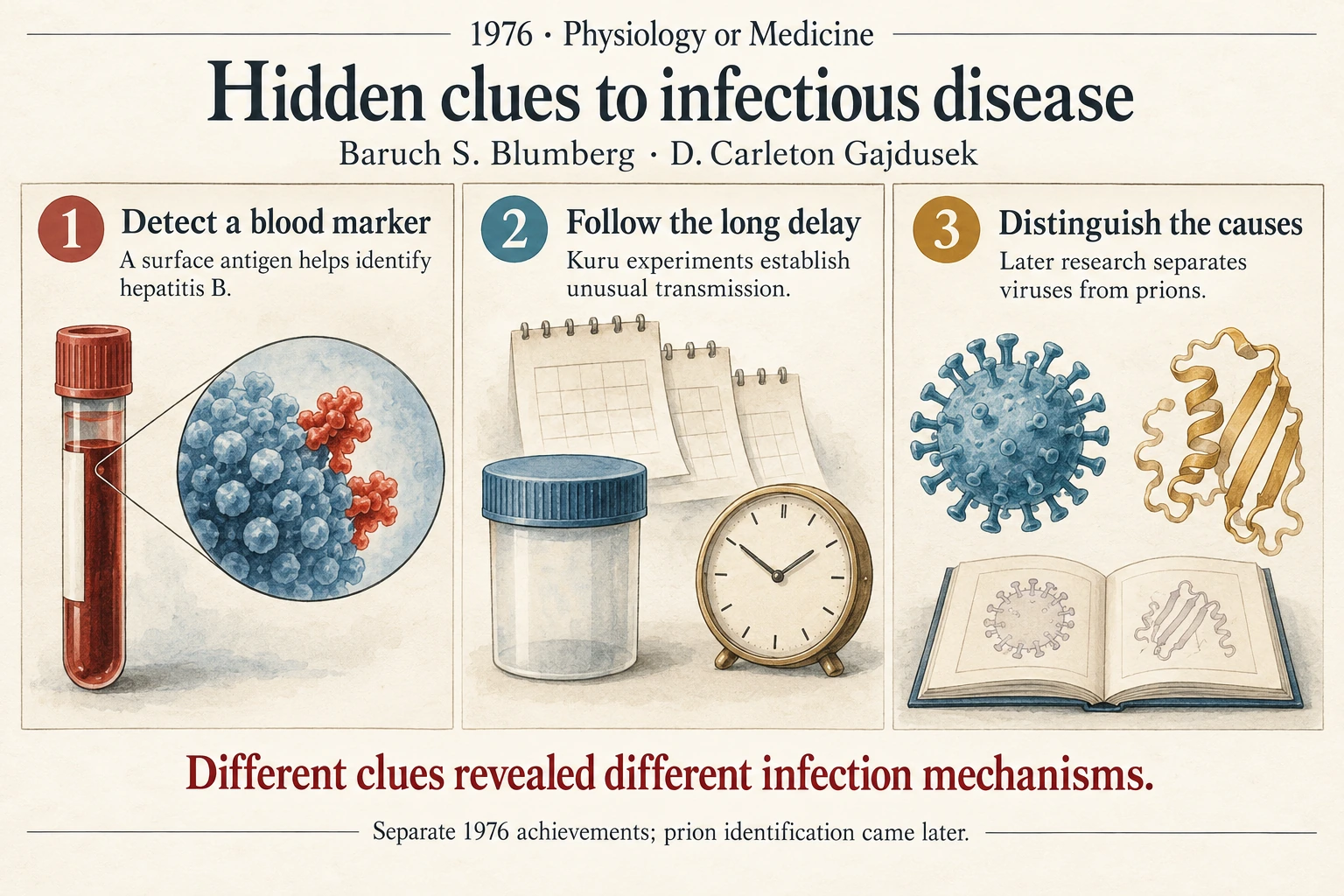
Infographic explaining Hidden clues to infectious disease
Original AI-generated infographic. A conceptual overview; the explanations and sources below provide context.
Read the poster text

Different clues revealed different infection mechanisms.

  1. Detect a blood marker

    A surface antigen helps identify hepatitis B.

  2. Follow the long delay

    Kuru experiments establish unusual transmission.

  3. Distinguish the causes

    Later research separates viruses from prions.

Separate 1976 achievements; prion identification came later.

01 · The discovery

The idea, in everyday language

Blumberg’s search for differences in blood proteins led to the Australia antigen, later identified as hepatitis B surface antigen, or HBsAg. Connecting that marker with infection made it possible to screen donated blood and supported vaccine development. The surface antigen is a viral protein, not a complete virus: suitable preparations of this protein can be used to stimulate immunity without injecting infectious hepatitis B virus. The first US plasma-derived vaccine was licensed in 1981, after the award, and recombinant vaccines followed. Hepatitis B transmission involves infected blood or certain body fluids, including transmission at birth; ordinary shared food or casual social contact is not the mechanism.

Gajdusek, Zigas, Gibbs, Alpers and other contributors investigated kuru among the Fore people in Papua New Guinea. Community participation and epidemiology connected exposure during particular funerary practices with later illness. Experimental transmission to chimpanzees after a long delay established that an unusual agent could produce slowly developing neurological disease. The experiments did not show that an ordinary virus caused kuru. Later work identified prions—misfolded protein agents—and earned Prusiner the 1997 prize. Blumberg and Gajdusek each received one half in 1976 for different discoveries, rather than one shared pathogen, vaccine or laboratory protocol.

Why it matters

The hepatitis work created practical routes to safer blood supplies and vaccination. Kuru research widened the understanding of what an infectious agent and an incubation period could be. Together the discoveries show why comparing samples, populations and long-term observations can reveal causes hidden behind symptoms.
02 · The people

Who brought the idea to life?

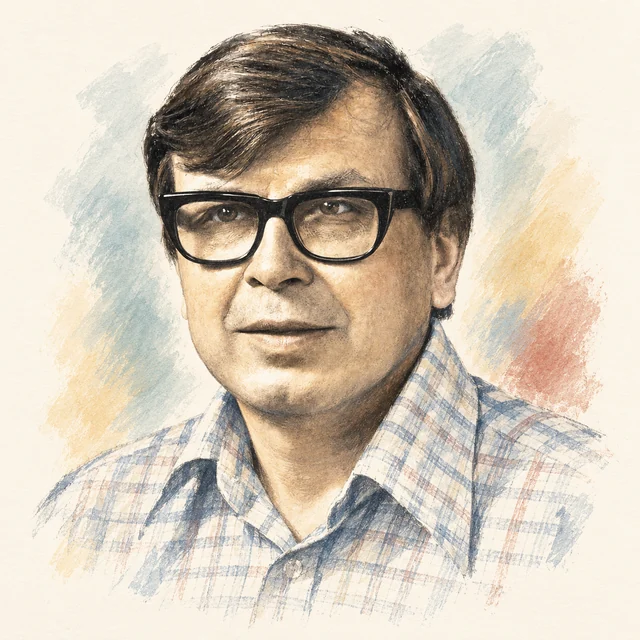
Illustrated portrait of Baruch S. Blumberg

Baruch S. Blumberg

Prize share · 1/2

Blumberg’s work linked a blood antigen to hepatitis B, enabling screening and vaccine development. He received half the Medicine Prize, while Gajdusek received the other half for separate research on transmissible neurological disease.

Read the biography ↗
Illustrated portrait of D. Carleton Gajdusek

D. Carleton Gajdusek

Prize share · 1/2

Gajdusek received half the Medicine Prize for work establishing unusual transmission mechanisms in neurological disease. His kuru studies were a collective undertaking and preceded the identification of prions as misfolded protein agents.

Read the biography ↗

03 · Years in the making

The path here

  1. 1957

    Gajdusek and Zigas begin documenting kuru with Fore participants.

  2. 1965

    Australia antigen is first described in publication; experimental kuru transmission becomes evident after a long delay.

  3. 1966

    Gajdusek, Gibbs and Alpers publish experimental transmission results.

  4. 1976

    Blumberg and Gajdusek share the Medicine Prize equally.

  5. 1981

    The first US plasma-derived hepatitis B vaccine is licensed.

  6. 1997

    Prusiner’s later prion work receives a separate Nobel Prize.

04 · Read further

From the original sources

Original explanations by Curionode, based on the official records below. Biographical details and affiliations refer to the award year.

  1. Official announcement nobelprize.org
  2. CDC: hepatitis B marker and vaccine history cdc.gov
  3. CDC: hepatitis B transmission cdc.gov
  4. Official 1997 prion announcement nobelprize.org
  5. NIH: Gajdusek historical biography history.nih.gov
  6. National Academy: Gajdusek memoir nasonline.org

More in Physiology or Medicine

Browse this subject ↗