A life in context
The person behind the prize
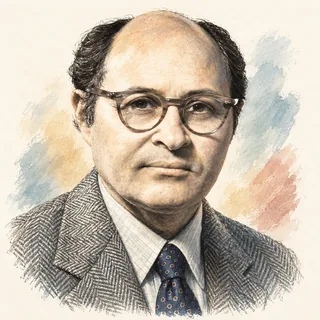
Arber studied natural sciences at the Swiss Federal Institute of Technology in Zurich and joined Eduard Kellenberger’s laboratory in Geneva in 1953. Electron microscopy gradually gave way to genetic and physiological work on bacteriophages. After his 1958 doctorate and research with Joe Bertani in California, he returned to Geneva in 1960. A problem in phage growth led him to host-controlled restriction and modification. With Daisy Dussoix he showed that these processes acted on DNA; they reported findings in 1961. Subsequent collaborators investigated nucleotide methylation, recognition sites and the responsible enzymes. He began work at Basel’s new Biozentrum in 1971, later broadening research to other mechanisms of genetic exchange. The account arose from many laboratory contributions, not an isolated discovery of a universal pair of molecular scissors.
The contribution
Arber established central principles of bacterial DNA restriction and modification, including recognition and protection by chemical marking. He received one third of the Medicine Prize. Different restriction systems cut DNA in different ways; recognition does not always mean cleavage at that exact site.
The idea in plain language
Arber and colleagues investigated why some bacteria restrict incoming phages while chemically modifying their own DNA. This linked recognition, DNA cutting and protection. Smith and colleagues isolated a simpler restriction enzyme from Haemophilus influenzae and characterised cleavage at a defined recognition site in work published in 1970.
Read the full award story ↗