A life in context
The person behind the prize
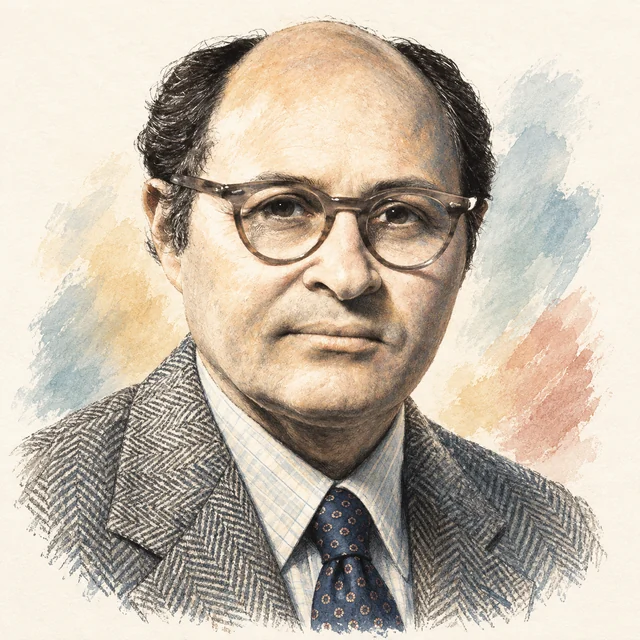
Nathans grew up in a large immigrant family in Wilmington during the Depression. He studied chemistry at Delaware and earned an MD at Washington University in 1954. A summer with Oliver Lowry had drawn him toward research; clinical training and NIH work preceded studies of protein synthesis in Fritz Lipmann’s laboratory. He joined Johns Hopkins in 1962. During a 1969 visit to the Weizmann Institute, a letter from Hamilton Smith suggested that a new restriction enzyme might dissect the DNA of tumour viruses. With Kathleen Danna, George Sack and other collaborators, he turned defined DNA fragments into cleavage maps of SV40 and used these maps to locate functions and investigate variants. A 1971 paper helped establish the approach, followed by mapping with multiple enzyme preparations. These were maps of cleavage sites and genetic functions, not simply the invention of base-by-base sequencing.
The contribution
Nathans developed the use of restriction enzymes to analyse and map viral DNA, working with Danna, Sack and other colleagues. He received one third of the Medicine Prize. Combining different digests reveals relationships among fragments and positions of sites.
The idea in plain language
Arber and colleagues investigated why some bacteria restrict incoming phages while chemically modifying their own DNA. This linked recognition, DNA cutting and protection. Smith and colleagues isolated a simpler restriction enzyme from Haemophilus influenzae and characterised cleavage at a defined recognition site in work published in 1970.
Read the full award story ↗