A life in context
The person behind the prize
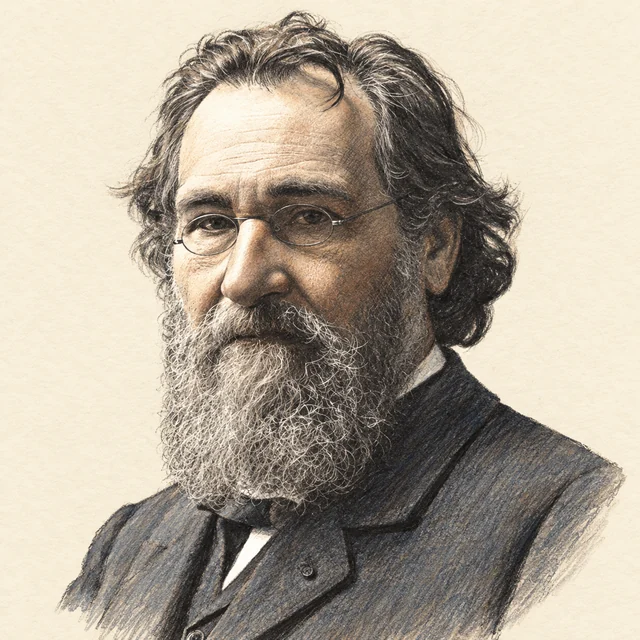
Ilya Ilyich Mechnikov, also known in French as Élie Metchnikoff, was born near Kharkov, in what is now Ukraine. He studied natural sciences at Kharkov and pursued zoology and embryology in several European research centres. Academic work in Odessa and St Petersburg preceded his appointment as professor of zoology in Odessa in 1870. He resigned in 1882 amid political and academic difficulties and continued research in Messina. Observations of mobile cells in transparent starfish larvae suggested that cells which engulfed foreign material might defend an organism rather than merely clear away the remains of infection. The observations of 1882 developed into a public account of phagocytosis in 1883. Work on small aquatic animals and later infections extended the argument. In 1886 he helped establish a rabies-treatment institute in Odessa, and in 1888 he joined the Institut Pasteur in Paris. His research connected inflammation, digestion within cells and resistance to infection, and brought him into prolonged debate with advocates of protective substances in serum. Books on inflammation and immunity consolidated a substantial experimental programme. He shared the 1908 Medicine Prize equally with Paul Ehrlich. Their approaches revealed different aspects of defence that modern immunology connects: antibodies and other soluble factors can work with cells, and antibodies themselves originate from cells. Mechnikov’s later interests included ageing and intestinal microbes, but historical ideas about fermented milk and longevity should not be treated as proven health advice. He remained in Paris and died in 1916. Phagocytosis was a major mechanism of immunity, not a complete explanation of every infection or every immune response.
The contribution
Mechnikov received half the Medicine Prize for work on immunity, especially establishing the defensive role of phagocytes: cells able to engulf foreign particles and microbes. He connected cellular activity with inflammation and resistance to infection.
The idea in plain language
Mechnikov’s observations connected mobile cells with defence. Cells could surround, engulf and digest foreign particles or microbes, a process called phagocytosis. Studies of small animals helped turn inflammation from a mere sign of disease into a question about protective cellular activity, although some microbes could resist destruction.
Read the full award story ↗