01 · The discovery
The idea, in everyday language
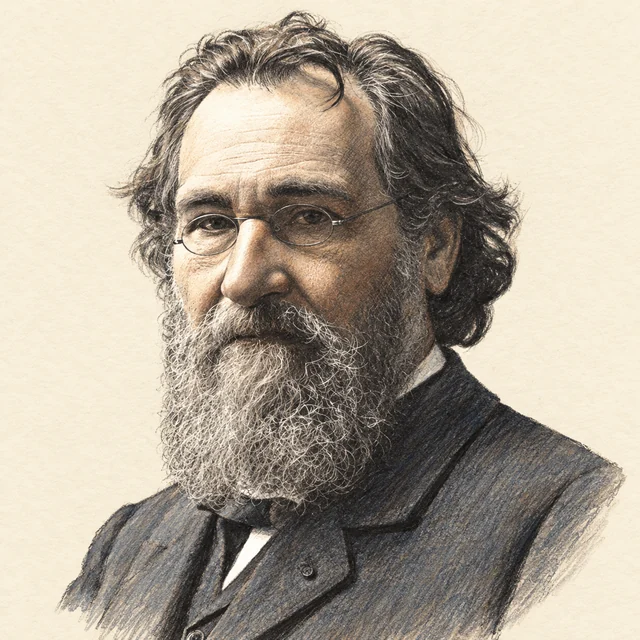
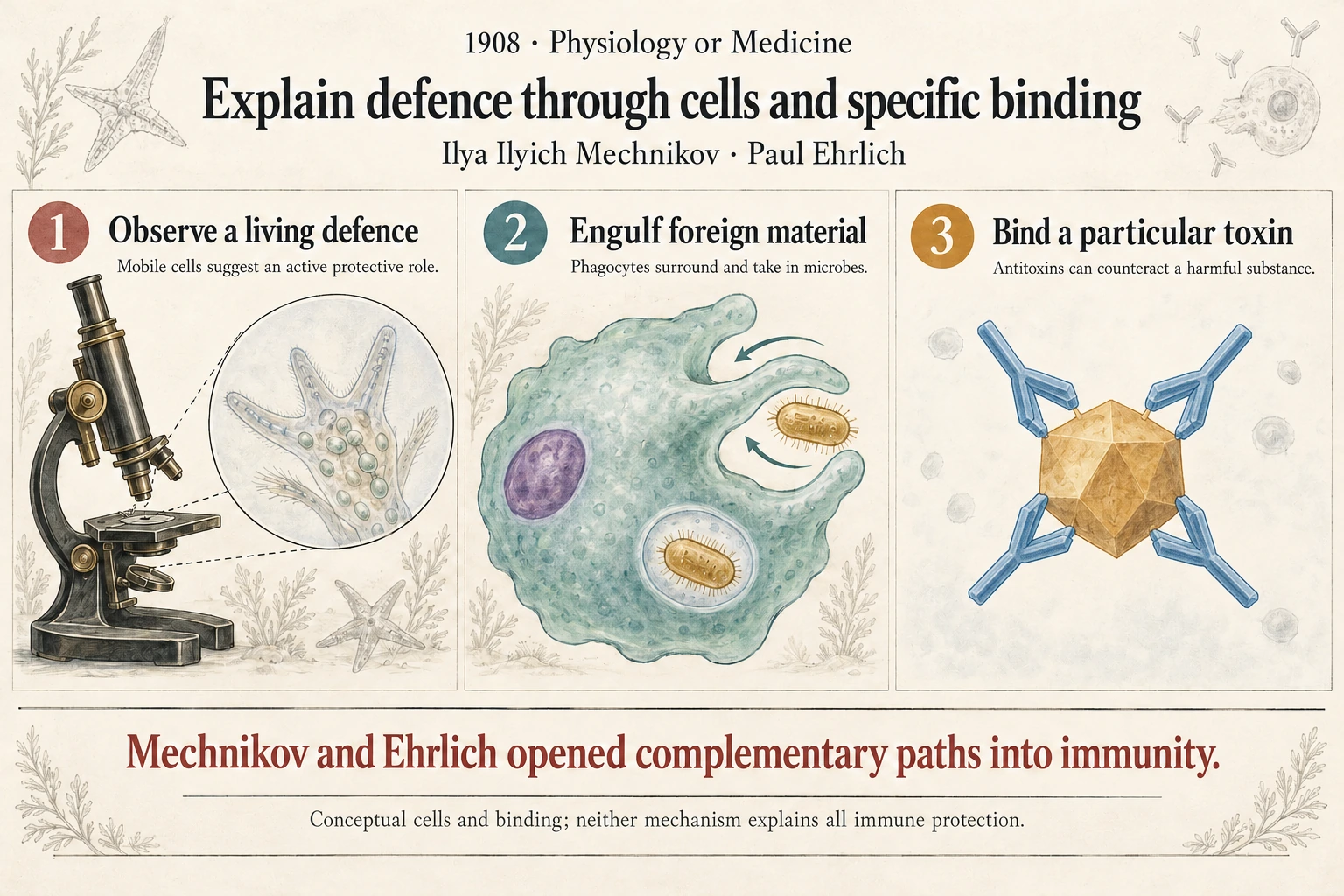
Mechnikov’s observations connected mobile cells with defence. Cells could surround, engulf and digest foreign particles or microbes, a process called phagocytosis. Studies of small animals helped turn inflammation from a mere sign of disease into a question about protective cellular activity, although some microbes could resist destruction.
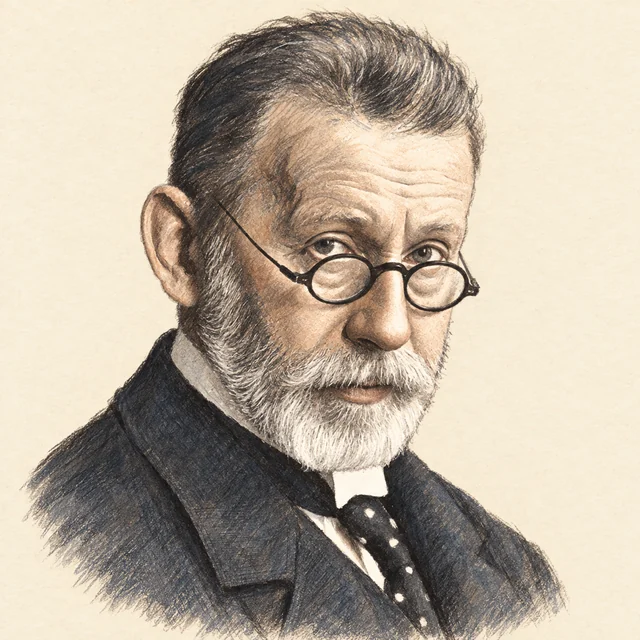
Ehrlich investigated another part of the problem: substances in body fluids could bind harmful bacterial toxins and counteract them. Work on antitoxins and standardising serum activity made specific protection measurable. His side-chain theory sought a chemical explanation of binding and antitoxin formation. The two programmes were debated as rival explanations, but modern immunity joins cells, antibodies and other soluble factors rather than making one exclude the other.
Why it matters
The work helped make immunity an experimental field, connecting observable cellular behaviour with specific biochemical interactions and standards for serum. Both researchers received half the 1908 prize; neither approach alone explains all immune protection.