c.curionodeThe Nobel Archive

1910 · Physiology or Medicine

Investigate the chemical building blocks of cells

Kossel studied proteins and substances associated with cell nuclei. Identifying their chemical constituents helped turn the cell’s composition into a subject of systematic biochemical analysis.

Cell chemistryNuclear substancesProteins
1910Physiology or Medicine

Visual guide

The prize, pictured

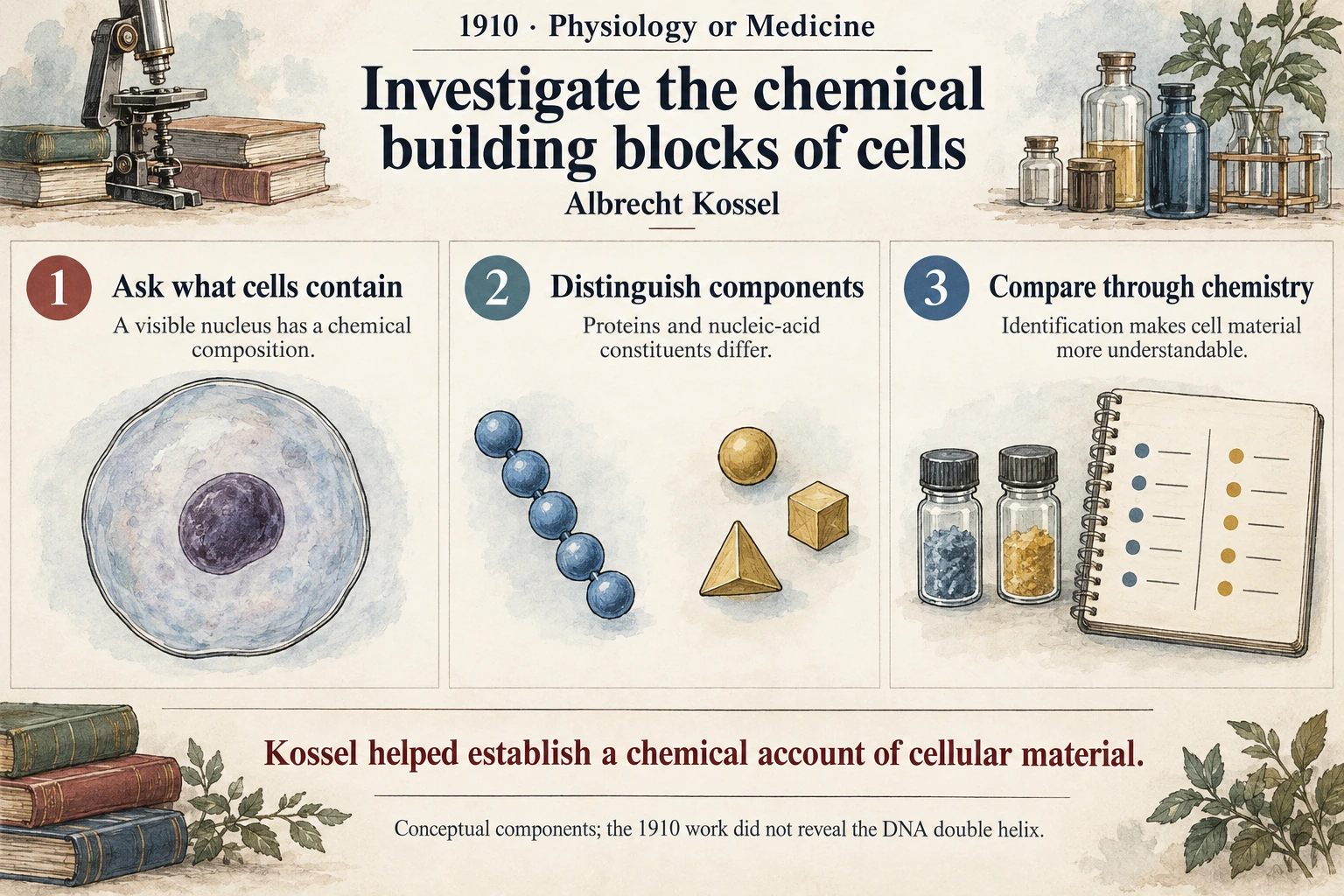
Infographic explaining Investigate the chemical building blocks of cells
Original AI-generated infographic. A conceptual overview; the explanations and sources below provide context.
Read the poster text

Kossel helped establish a chemical account of cellular material.

  1. Ask what cells contain

    A visible nucleus has a chemical composition.

  2. Distinguish components

    Proteins and nucleic-acid constituents differ.

  3. Compare through chemistry

    Identification makes cell material more understandable.

Conceptual components; the 1910 work did not reveal the DNA double helix.

01 · The discovery

The idea, in everyday language

Seeing a nucleus under a microscope does not establish what its material is made of. Kossel investigated substances isolated from cells, distinguishing and characterising components through chemistry. His work included nucleic-acid constituents and proteins such as histones and protamines, rather than treating all nuclear material as one substance.

He and his collaborators studied nitrogen-containing bases, basic amino acids and their proportions in different materials. These are distinct chemical groups: histidine, for example, is an amino acid, not a nucleic-acid base. The full 1910 Physiology or Medicine Prize recognised contributions to cell chemistry through research on proteins, including nuclear substances. It did not announce the later double-helix model or genetic code.

Why it matters

The work provided firmer chemical knowledge of cellular material and tools for comparing proteins and nuclear substances. Later researchers could build on that foundation when investigating molecular structure and biological function.
02 · The people

Who brought the idea to life?

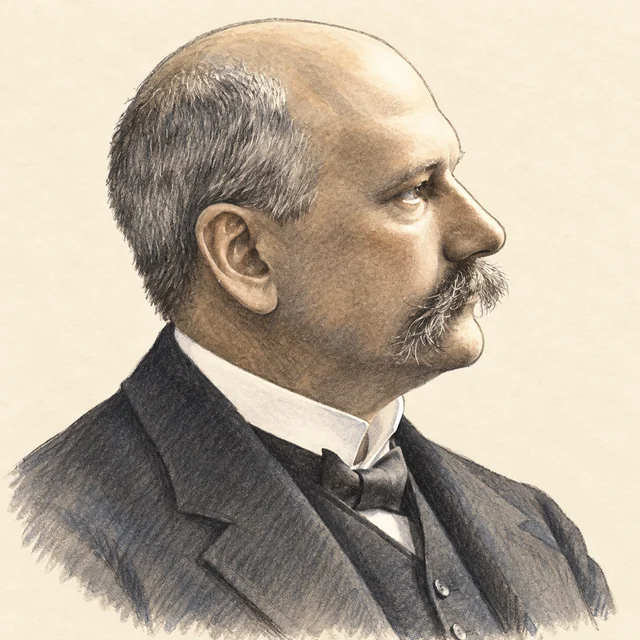
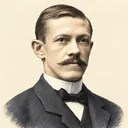
Illustrated portrait of Albrecht Kossel

Albrecht Kossel

Prize share · 1

Kossel received the full Medicine Prize for contributions to cell chemistry through research on proteins and nucleic substances. Identifying their different components and quantitative relationships helped make the cell’s material composition experimentally accessible.

Read the biography ↗

03 · Years in the making

The path here

  1. 1878

    Kossel receives his medical doctorate.

  2. 1883

    He moves to Berlin to lead physiological chemistry work.

  3. 1895

    He becomes professor in Marburg.

  4. 1896

    He discovers the amino acid histidine.

  5. 1901

    He takes the Heidelberg chair.

  6. 1910

    He receives the full Physiology or Medicine Prize.

  7. 1927

    He dies in Heidelberg.

04 · Read further

From the original sources

Original explanations by Curionode, based on the official records below. Biographical details and affiliations refer to the award year.

  1. Official award summary nobelprize.org
  2. Award ceremony speech nobelprize.org
  3. Heidelberg University Archive: Kossel biographical leaflet uni-heidelberg.de

More in Physiology or Medicine

Browse this subject ↗