A life in context
The person behind the prize
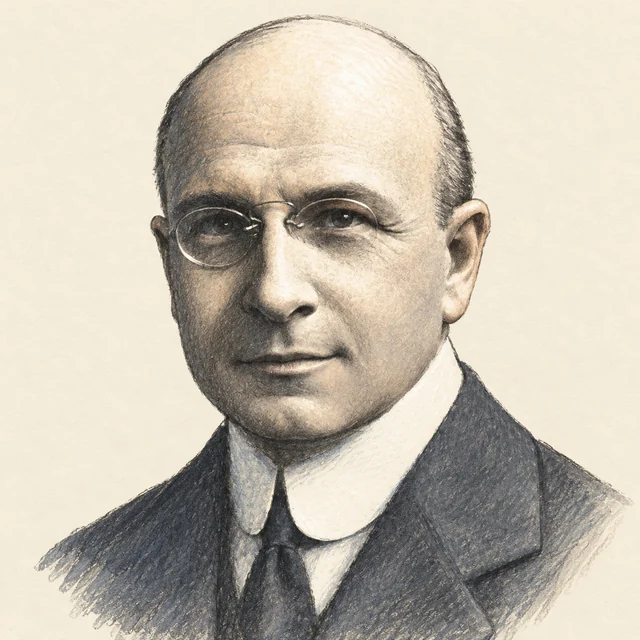
Alexis Carrel trained in Lyon, receiving his medical doctorate in 1900. In 1902 he published work on joining blood vessels while preserving an open passage for blood. After moving to North America in 1904, he worked in Chicago and joined the Rockefeller Institute in 1906, becoming a full member in 1912. His experimental surgery explored vessel repair, replacement and preservation, and the restoration of circulation to transplanted organs. Much of this work used animals. It established technical possibilities without solving the immune rejection that limited transfers between different individuals. During the First World War, he worked with Henry Dakin on wound treatment. Later, with Charles Lindbergh, he developed apparatus for perfusing organs outside the body. These projects followed the vascular research recognised in 1912. His wider public writings also promoted racist and eugenic ideas, including coercive exclusion of people he considered unfit. Those views were not scientific consequences of his surgical results. He later directed a foundation established under the Vichy government and died in Paris in 1944. The INSERM-hosted historical account discusses these views and the later controversy over commemorating him.
The contribution
Carrel received the full Physiology or Medicine Prize for vascular suturing and transplantation of blood vessels and organs. Maintaining blood flow through a repaired connection made important surgical and experimental work possible, while immune rejection remained a separate barrier.
The idea in plain language
Living tissues need a continuing blood supply. Closing a damaged vessel can stop bleeding but also cut off the route that nourishes tissue beyond it. Carrel developed more effective methods of connecting vessel ends while preserving the passage through the join. Repair had to address leakage, narrowing and clotting, rather than merely bringing two pieces close together.
Read the full award story ↗