c.curionodeThe Nobel Archive

1912 · Physiology or Medicine

Reconnect blood vessels while keeping a route open

Carrel improved ways of joining blood vessels so circulation could be restored. The work supported vascular repair and experimental organ transplantation, while rejection remained a separate problem.

Blood vesselsCirculationExperimental transplantation
1912Physiology or Medicine

Visual guide

The prize, pictured

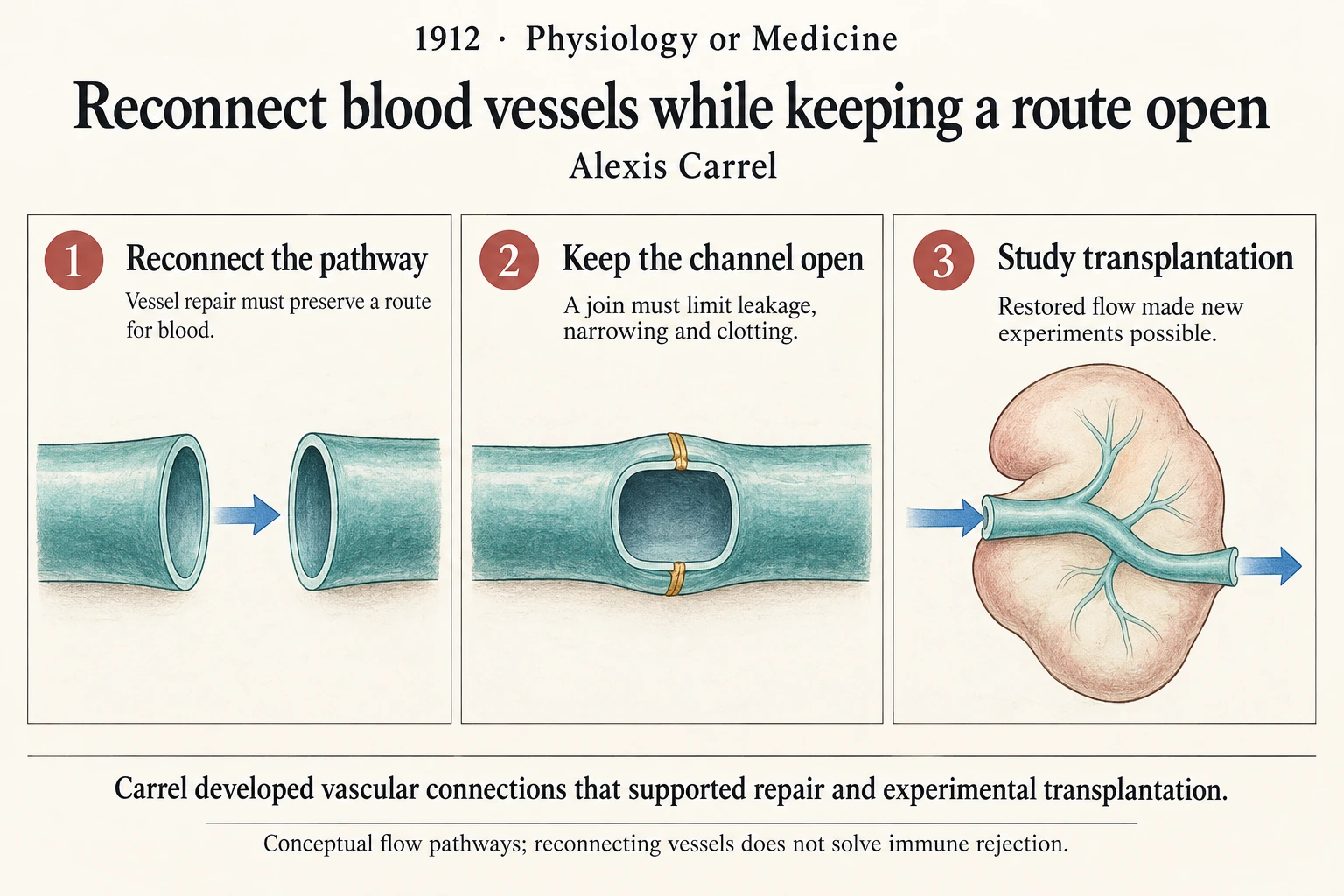
Infographic explaining Reconnect blood vessels while keeping a route open
Original AI-generated infographic. A conceptual overview; the explanations and sources below provide context.
Read the poster text

Carrel developed vascular connections that supported repair and experimental transplantation.

  1. Reconnect the pathway

    Vessel repair must preserve a route for blood.

  2. Keep the channel open

    A join must limit leakage, narrowing and clotting.

  3. Study transplantation

    Restored flow made new experiments possible.

Conceptual flow pathways; reconnecting vessels does not solve immune rejection.

01 · The discovery

The idea, in everyday language

Living tissues need a continuing blood supply. Closing a damaged vessel can stop bleeding but also cut off the route that nourishes tissue beyond it. Carrel developed more effective methods of connecting vessel ends while preserving the passage through the join. Repair had to address leakage, narrowing and clotting, rather than merely bringing two pieces close together.

Restoring circulation also made it possible to investigate transplanted organs. His research included vessel replacement and preservation, and much of it was conducted in animals. An organ transferred within the same animal and one transferred to a different animal presented different problems. The technical ability to reconnect circulation did not remove the immune barrier responsible for rejection. The 1912 award recognised vascular suturing and experimental transplantation, not a completed solution to modern human organ replacement.

Why it matters

The work widened the possibilities of vascular surgery and provided tools for studying transplantation. Later clinical advances also depended on immunology, preservation, medicines and the work of many other researchers and teams.
02 · The people

Who brought the idea to life?

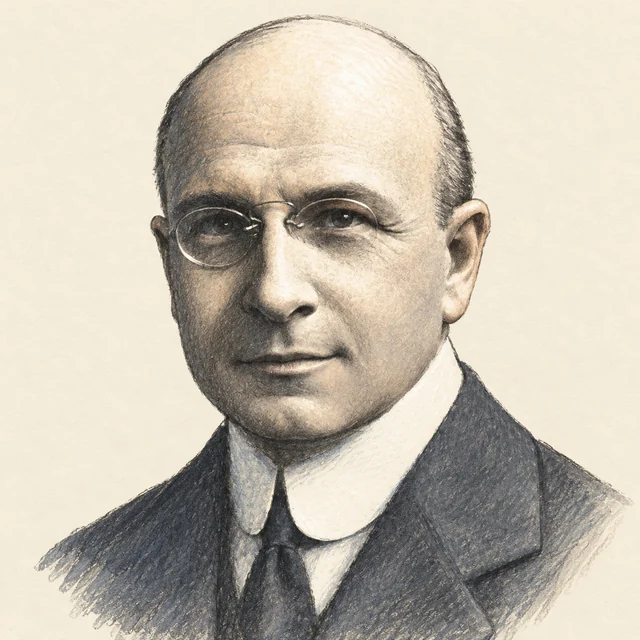
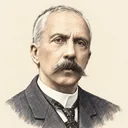
Illustrated portrait of Alexis Carrel

Alexis Carrel

Prize share · 1

Carrel received the full Physiology or Medicine Prize for vascular suturing and transplantation of blood vessels and organs. Maintaining blood flow through a repaired connection made important surgical and experimental work possible, while immune rejection remained a separate barrier.

Read the biography ↗

03 · Years in the making

The path here

  1. 1873

    Carrel is born near Lyon.

  2. 1900

    He receives his medical doctorate in Lyon.

  3. 1902

    He publishes work on vascular connections.

  4. 1906

    He joins the Rockefeller Institute.

  5. 1912

    He receives the full Physiology or Medicine Prize.

  6. 1944

    He dies in Paris after leading a Vichy-established foundation.

04 · Read further

From the original sources

Original explanations by Curionode, based on the official records below. Biographical details and affiliations refer to the award year.

  1. Official award summary nobelprize.org
  2. Award ceremony speech nobelprize.org
  3. Rockefeller University: Carrel’s vascular research rockefeller.edu
  4. INSERM archive: Carrel’s eugenics and public commemoration ipubli.inserm.fr

More in Physiology or Medicine

Browse this subject ↗