01 · The discovery
The idea, in everyday language
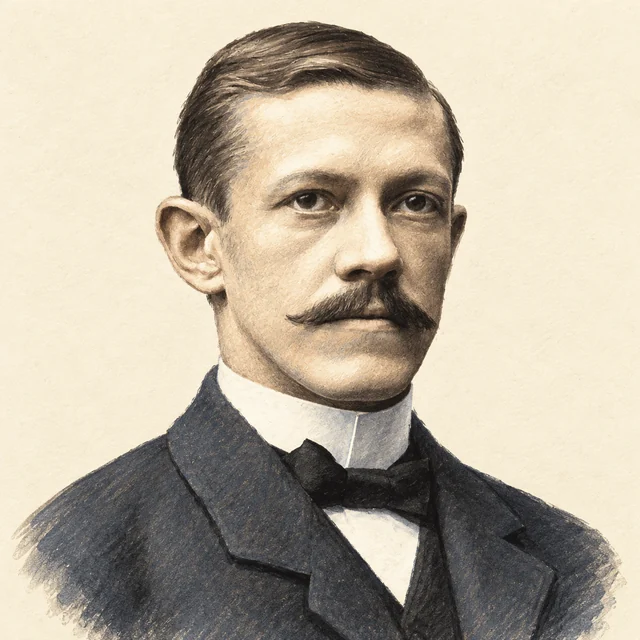
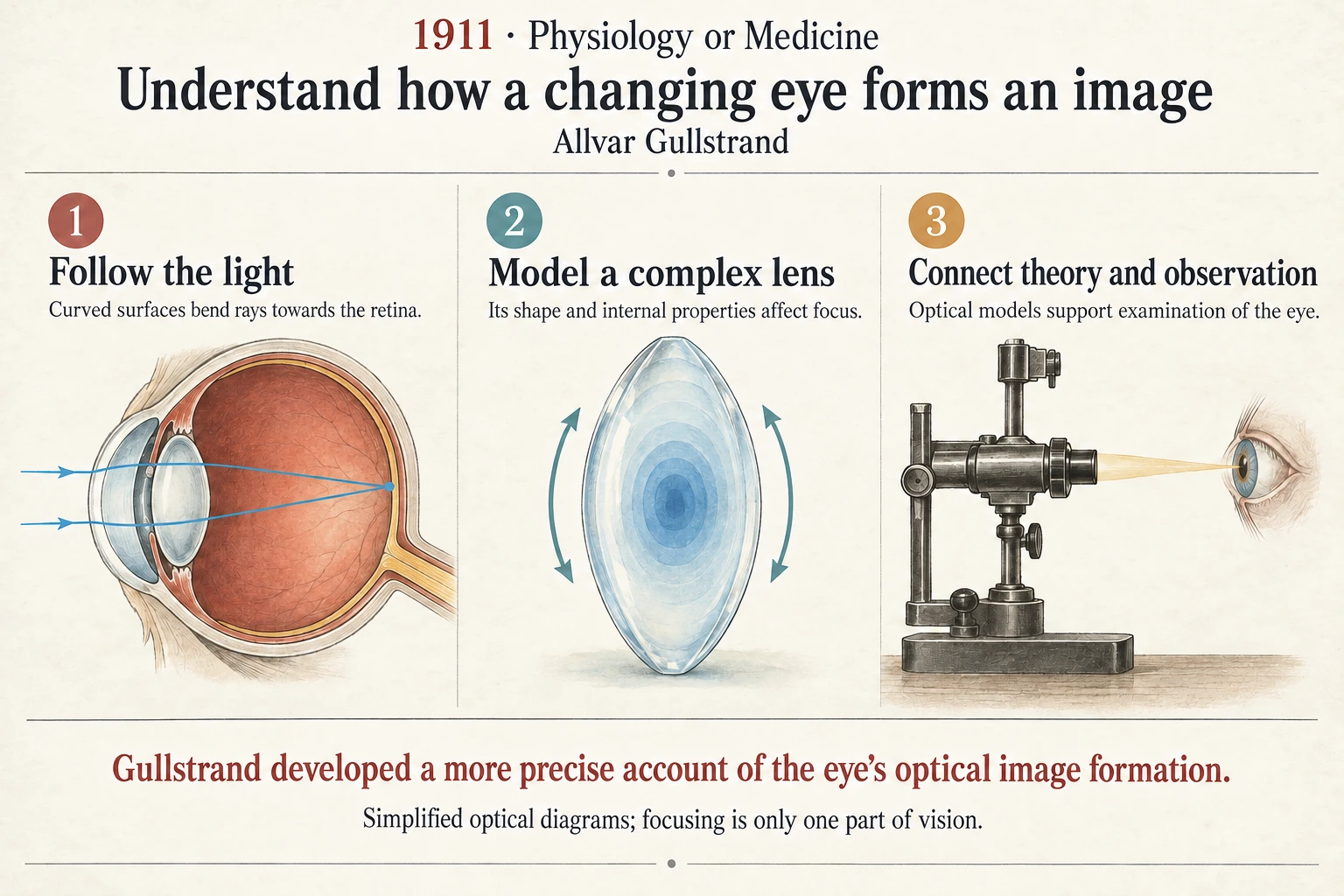
A simple lens calculation can assume one uniform material and fixed surfaces. The eye is harder: light crosses the cornea and internal media, while the crystalline lens has a refractive index that varies from layer to layer. Its shape also changes during accommodation, allowing near and distant objects to be brought into focus. Gullstrand developed optical analysis suited to such complex systems and used it to study the eye’s image formation.
His work linked general mathematical descriptions with anatomical and clinical questions, including astigmatism and the effect of changing curvature. It was not just a diagram of one ideal eye. Examination instruments, including the slit lamp and reflection-free ophthalmoscope, made structures easier to inspect. Work with Zeiss helped turn optical ideas into instruments, while the Nobel Prize specifically recognised the eye’s dioptrics.
Why it matters
The research gave ophthalmology more precise tools for analysing refractive errors and optical image quality. Theoretical models and examination instruments could inform one another, supporting later developments in eye care.