A life in context
The person behind the prize
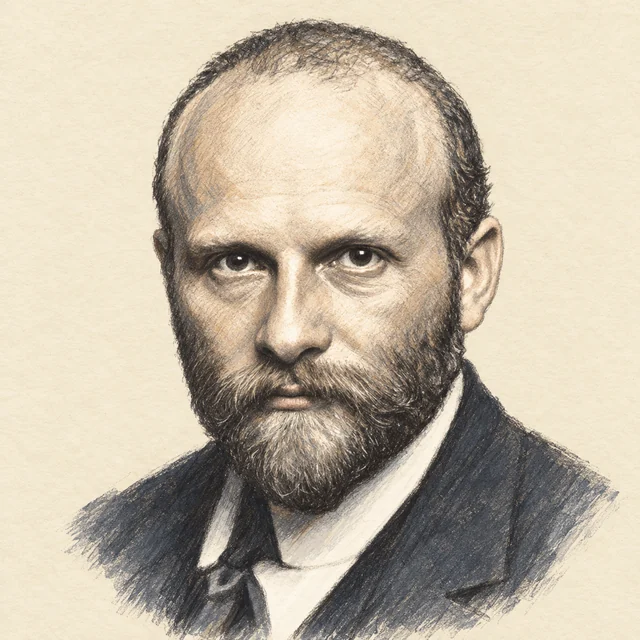
Robert Bárány was born in Vienna and completed medical studies there in 1900. Further training in Germany and work in Vienna led him towards neurology and diseases of the ear. In 1903 he joined Adam Politzer’s otological clinic. Building on earlier work by physiologists and clinicians, he investigated relationships between the inner ear, eye movements and balance. A systematic study of temperature-related responses during ear treatment led to the caloric reaction, reported in 1905. He also studied responses to rotation and the coordination of movement. The 1914 Physiology or Medicine Prize recognised his work on the physiology and pathology of the vestibular apparatus. It was reserved and announced on 29 October 1915, while he was held as a prisoner of war in Russia after serving as a surgeon with the Austrian forces. He was released in 1916 and then accepted the prize in Sweden. On returning to Vienna, he faced criticism about acknowledgement of predecessors; the historical sources also record colleagues who defended him. This guide does not treat that controversy as an established finding of fraud. Uppsala University recruited him to a professorship in ear, nose and throat diseases in 1917, where he continued his research and clinical work. Vienna remains the affiliation relevant to the award. He died in Uppsala in 1936.
The contribution
Bárány received the full Physiology or Medicine Prize for making aspects of vestibular function experimentally and clinically accessible. His studies linked stimulation of the inner-ear balance apparatus to observable eye and movement responses.
The idea in plain language
Balance depends on the inner ear working with vision and signals from the body. The vestibular apparatus includes semicircular canals involved in sensing head rotation. Earlier researchers had already connected the inner ear with movement and balance. Bárány’s contribution was to investigate reactions systematically and develop ways to use them in physiological and clinical examination.
Read the full award story ↗

