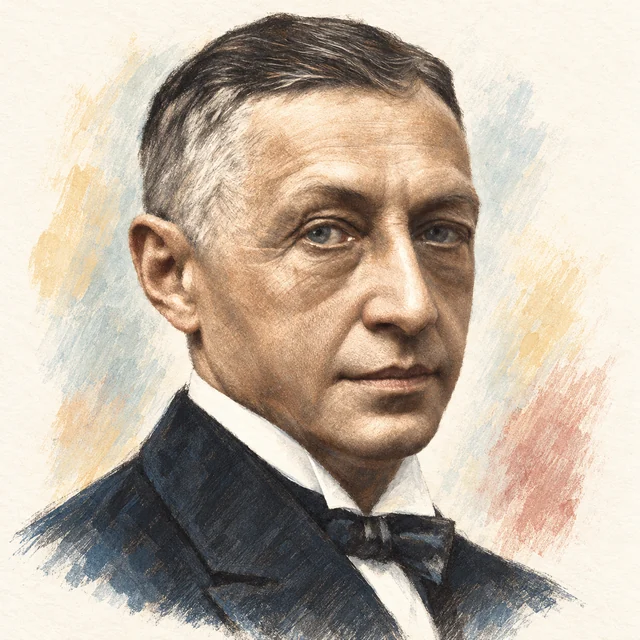
A life in context
The person behind the prize
Bunin was born in Voronezh and spent much of his childhood in the Russian countryside. He began with poetry and went on to write short stories, novellas, autobiographical prose and translations. Rural experience, travel and close attention to language shaped his work. The Village appeared in 1910; the collection Sukhodol followed in 1912, gathering work from 1911–1912. His writing could expose harsh social relations while making small sensory details carry emotional weight. The 1916 collection The Gentleman from San Francisco gathered work from 1915–1916; its collection date should not be mistaken for every story’s first publication. Bunin left Moscow in 1918 and emigrated from Russia in 1920, later living in Paris and the French maritime Alps. The Life of Arseniev began appearing in book form in 1930; its later continuation Lika was published in 1939. The 1933 Literature Prize recognized his continuation of the Russian classical tradition in prose. Dark Alleys, published in 1943, belongs to his later career.
The contribution
Bunin received the full Literature Prize for the artistry of his prose and his continuation of Russian classical literary traditions. His concentrated descriptions connect landscape, memory, social relations and loss.
The idea in plain language
How can prose make a vanished place or a passing sensation feel present without merely listing what was there? Bunin selected details of light, weather, sound and gesture, shaping them through rhythm and point of view. The Village and Sukhodol portray rural life and changing social relations without turning the countryside into a simple idyll. Their harshness and beauty coexist; the characters’ experiences are literary constructions, not a complete sociological account of Russia.
Read the full award story ↗

