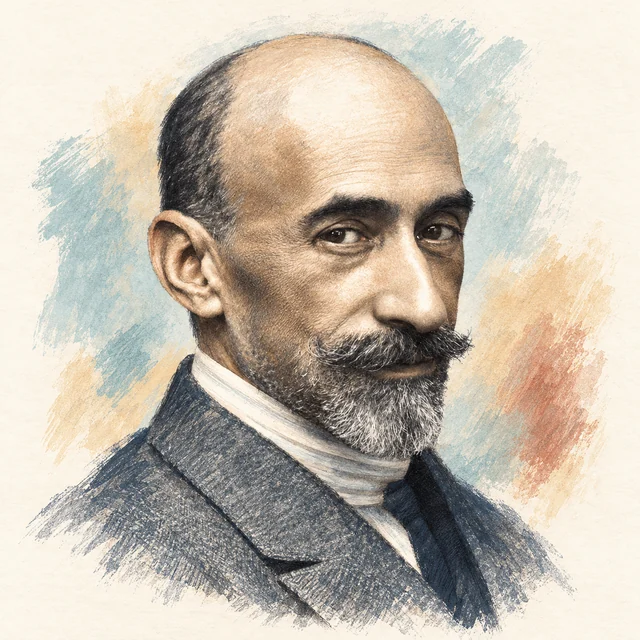
A life in context
The person behind the prize
Benavente grew up in Madrid, the son of a physician. He began studying law but left after his father’s death and travelled abroad before working as a writer and editor. A collection of short plays appeared in 1892, followed by works including El nido ajeno in 1894 and Gente conocida in 1896. He became known for comedies of manners in which conversation, character and competing interests reveal social arrangements. Madrid and the invented provincial town of Moraleda supplied recurring settings. His range also included fantasy and serious rural drama. Los intereses creados (1907) uses theatrical artifice and interlocking interests; La Malquerida followed in 1913. The full 1922 Literature Prize recognised his continuation of Spanish dramatic traditions in a distinctive modern form. Spain was his residence at the award, rather than a university affiliation. He continued writing for decades. Later he supported Franco’s regime, a political position separate from the 1922 literary award. He died in Madrid in 1954.
The contribution
Benavente received the full Literature Prize for continuing the traditions of Spanish drama. His comedies and dramas combined close social observation with character conflict, economical dialogue and carefully shaped stage action.
The idea in plain language
A play can reveal a social world through what people want from one another. Benavente used dialogue, contrasting characters and the consequences of decisions to make those interests visible on stage. Madrid society and the fictional town of Moraleda offered settings in which private relationships and public appearances could be brought into conflict.
Read the full award story ↗

