A life in context
The person behind the prize
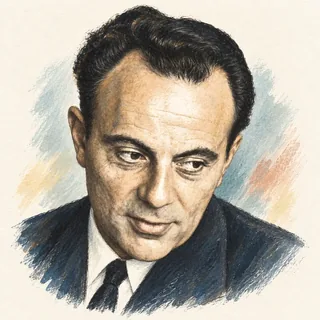
Monod grew up largely in southern France and began higher studies in Paris in 1928. He received a science degree in 1931 and doctorate in 1941. Contacts with Teissier, Lwoff, Ephrussi and Rapkine shaped his quantitative, microbiological and biochemical outlook. A Rockefeller grant supported a Caltech visit in 1936. After the war he joined Pasteur as laboratory director in Lwoff’s department, becoming head of Cell Biochemistry in 1954 and professor of metabolic chemistry at the Sorbonne in 1959. Work on enzyme induction and collaboration with Jacob helped establish how regulatory mechanisms adjust protein synthesis to conditions. Pasteur was his 1965 affiliation. His Collège de France appointment in 1967 and directorship of Pasteur in 1971 were later developments.
The contribution
Monod investigated enzyme induction and, with Jacob, genetic regulation of protein synthesis. He received one third of the Medicine Prize.
The idea in plain language
A cell carries genetic information, yet its production of enzymes changes with conditions. Some bacteria also carry phage information without continuously releasing viruses. The problem was to understand how genetic activity could be regulated.
Read the full award story ↗