A life in context
The person behind the prize
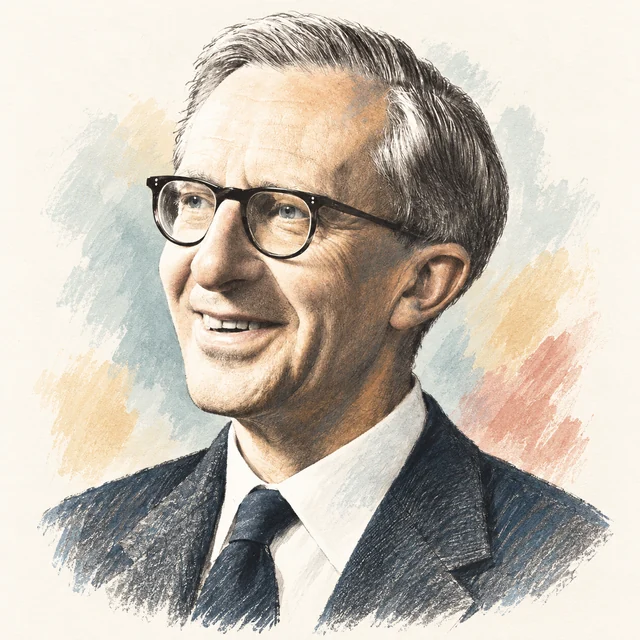
Meade grew up in Bath and changed from classical studies to philosophy, politics and economics at Oxford. A year at Cambridge in 1930–1931 brought discussion with the group around Keynes. He taught at Oxford, worked on the League of Nations’ World Economic Survey and served in Britain’s wartime Economic Section. With Richard Stone he helped prepare national income and expenditure accounts, while international settlements and employment policy became major interests. At the London School of Economics from 1947, he wrote the two parts of The Theory of International Economic Policy: The Balance of Payments in 1951 and Trade and Welfare in 1955. He moved to Cambridge in 1957. His work asked how policy choices connect domestic employment and stability with international payments and trade, recognising the difficulty of understanding an economy as a whole.
The contribution
Meade developed international macroeconomic and welfare analysis, examining how policies interact in economies open to trade and capital flows. He received one half of the Economic Sciences memorial prize, sharing it with Ohlin.
The idea in plain language
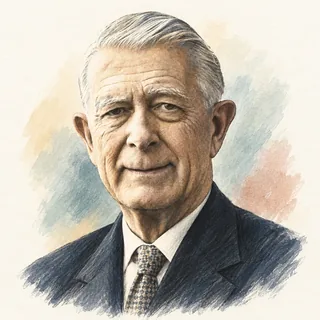
Ohlin connected relative supplies of labour, capital and other production factors with the goods a region tends to produce and exchange. In an appropriate model, goods intensive in relatively abundant factors can be easier to supply. Trade changes prices and resource allocation, so income effects need not be identical for every group. Technology, location and model assumptions matter; a factor-proportion model is not a complete description of all trade.
Read the full award story ↗