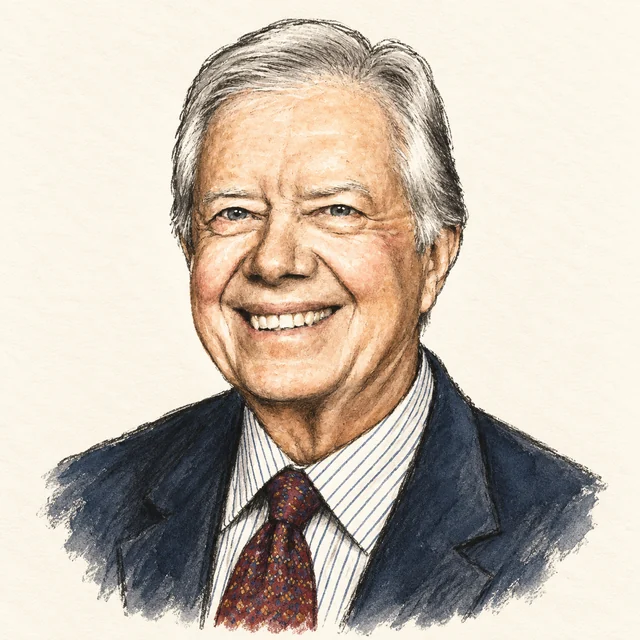
A life in context
The person behind the prize
Carter graduated from the United States Naval Academy in 1946 and served in the Navy before returning to Georgia in 1953. He entered state politics, became governor in 1971 and served as US president from 1977 to 1981. After leaving office, he founded The Carter Center in 1982. The next two decades brought extensive work in mediation, election observation, human rights and public health, with colleagues and partners in many countries.
The contribution
The Nobel Committee recognised Carter’s sustained efforts to resolve conflicts peacefully and connect peace with democracy, rights and development. His mediation contributed to the 1978 Camp David Accords between Egypt and Israel. His later work through The Carter Center extended beyond diplomacy to election observation and efforts against disease. The 2002 prize was awarded to Carter individually, while the practical work depended on many people and local institutions.
The idea in plain language
A peace agreement rarely emerges from one conversation. Mediation involves keeping communication open, understanding what different parties can accept and helping them reach commitments they are willing to uphold. Carter’s role in the 1978 Camp David Accords was one prominent example of the diplomatic work recognised by the Nobel Committee.
Read the full award story ↗

