A life in context
The person behind the prize
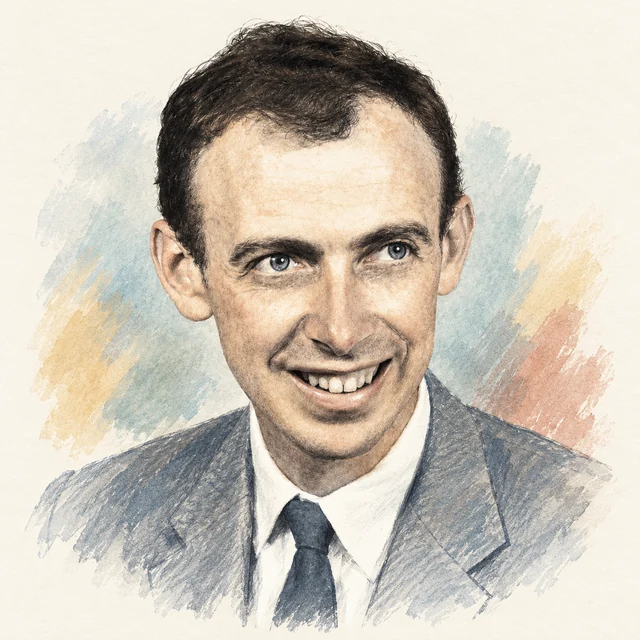
Watson received his Chicago zoology degree in 1947 and Indiana doctorate in 1950 under Luria, studying bacteriophages. Postdoctoral work in Copenhagen and a 1951 encounter with Wilkins’s DNA diffraction results encouraged structural research. He joined Cambridge’s Cavendish Laboratory in October 1951 and worked with Crick. An initial model was unsuccessful; chemical constraints and additional experimental evidence supported their 1953 complementary double helix. Franklin and Gosling’s work, Wilkins and colleagues’ diffraction studies, Chargaff’s base proportions and Donohue’s chemical advice contributed to the achievement. Following work at Caltech and another Cambridge stay, he joined Harvard in 1956 and became professor in 1961, his award affiliation. Later books and institutional leadership were subsequent history, distinct from the recognised contribution.
The contribution
Watson and Crick proposed DNA’s complementary double-helical structure using experimental and chemical constraints. Watson received one third.
The idea in plain language
DNA was implicated in heredity, but its arrangement and the way information could be preserved needed explanation. Experimental diffraction, chemical composition and model building supplied different constraints on a plausible structure.
Read the full award story ↗