A life in context
The person behind the prize
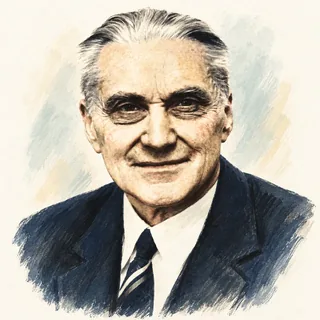
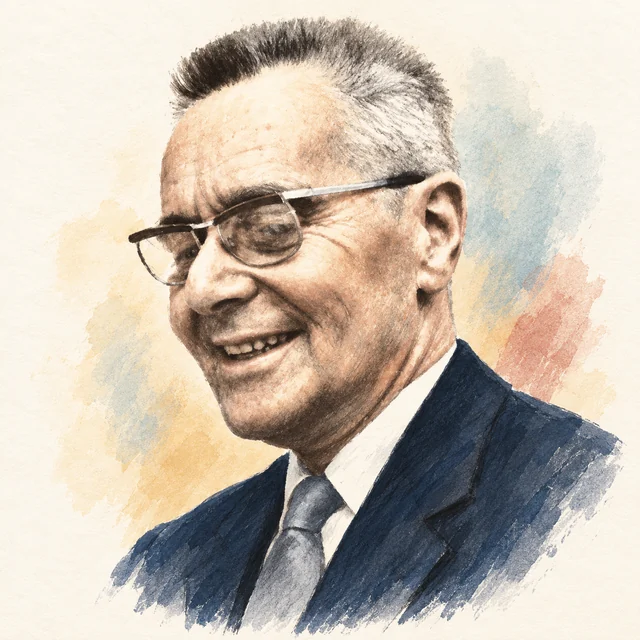
Tinbergen earned a physics doctorate at Leiden in 1929, while turning toward economic questions. From 1929 to 1945 he worked on business-cycle statistics at the Netherlands’ Central Bureau of Statistics. He also served the League of Nations during 1936–1938. His 1939 study of United States business cycles tested economic relationships using a system of equations and statistical evidence. Teaching at the Netherlands School of Economics began in 1933; from 1956 he worked there full time on development programming. As director of the Central Planning Bureau from 1945 to 1955, he connected modelling with policy analysis. Later advisory work addressed development and investment priorities. He shared the first memorial prize with Frisch in 1969. His younger brother Nikolaas, an animal-behaviour researcher, was a different recipient in 1973.
The contribution
Tinbergen applied dynamic economic models to evidence and policy questions. He received half the first Economic Sciences memorial prize.
The idea in plain language
Dynamic models specify how economic variables interact and how effects unfold over time. Frisch used mathematical systems to analyse cyclical movement and disturbances, alongside methods for statistical testing.
Read the full award story ↗