A life in context
The person behind the prize
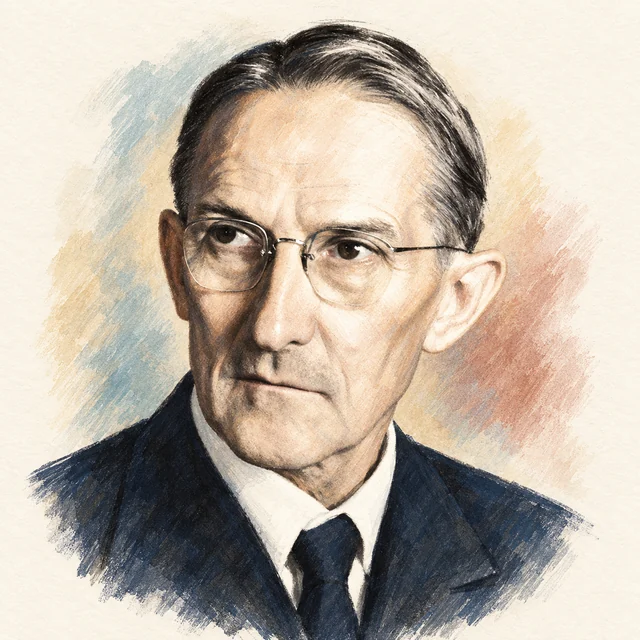
Heyrovský began studies in Prague in 1909, continued at University College London and received his bachelor’s degree there in 1913. Work with Donnan fostered his interest in electrochemistry. He completed a Prague doctorate in 1918 and a London DSc in 1921. Investigating a problem associated with mercury drops led to electrical measurements and the polarographic method in 1922. With Masuzo Shikata he constructed an automatic polarograph in 1924, as his own Nobel lecture records. The current–potential curve made the position and size of electrochemical responses useful for analysis. He became professor of physical chemistry at Charles University in 1926 and director of the Polarographic Institute in 1950; it joined the Academy in 1952. The full 1959 prize recognised discovery and development of the method, including the research school and collaborative work that extended its foundations and applications.
The contribution
Heyrovský discovered and developed polarographic methods for identifying and measuring substances through electrochemical responses. He received the full Chemistry Prize.
The idea in plain language
Analysts needed sensitive ways to identify substances and estimate their quantities in small samples. An unexpected problem with mercury drops led Heyrovský to measure electrical responses rather than continue weighing the drops.
Read the full award story ↗

