01 · The discovery
The idea, in everyday language
Analysts needed sensitive ways to identify substances and estimate their quantities in small samples. An unexpected problem with mercury drops led Heyrovský to measure electrical responses rather than continue weighing the drops.
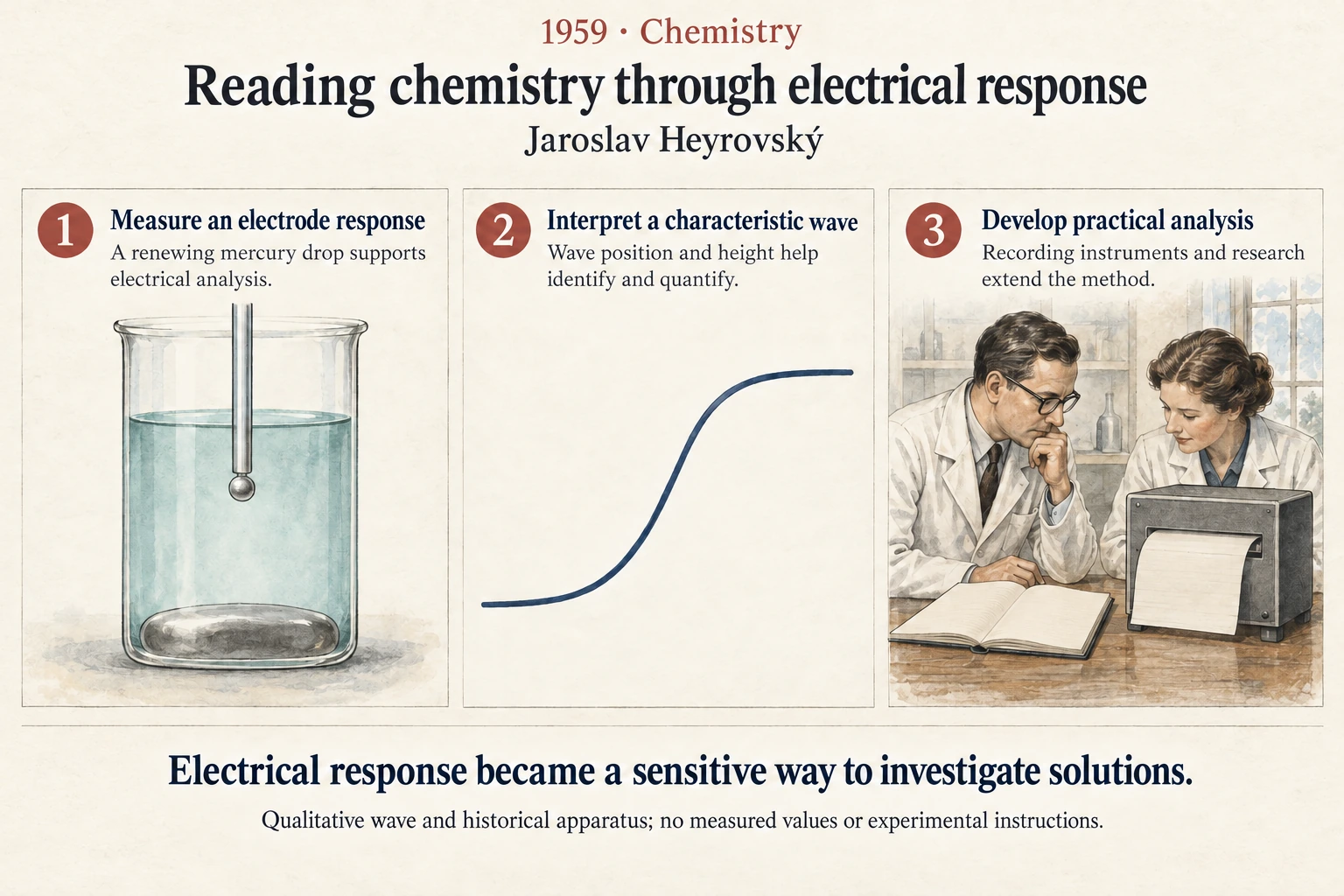
In 1922 he developed polarographic analysis using a dropping mercury electrode. The renewing surface supported reproducible measurements as applied potential changed. Electrochemical reactions produced characteristic responses; their position and height could help identify substances and estimate concentration. With Shikata he constructed the automatic polarograph in 1924.
Why it matters
Polarography brought sensitive chemical analysis to research and industrial laboratories. Heyrovský and collaborators developed its theory, recording instruments and applications. The full prize recognised both discovery and sustained development, rather than a claim that every substance can always be identified without interference.