c.curionodeThe Nobel Archive

1958 · Chemistry

Finding the order inside a protein

Sanger’s chemical analysis established the amino-acid sequence and connections of insulin.

Protein sequenceInsulinOverlapping fragments
1958Chemistry

Visual guide

The prize, pictured

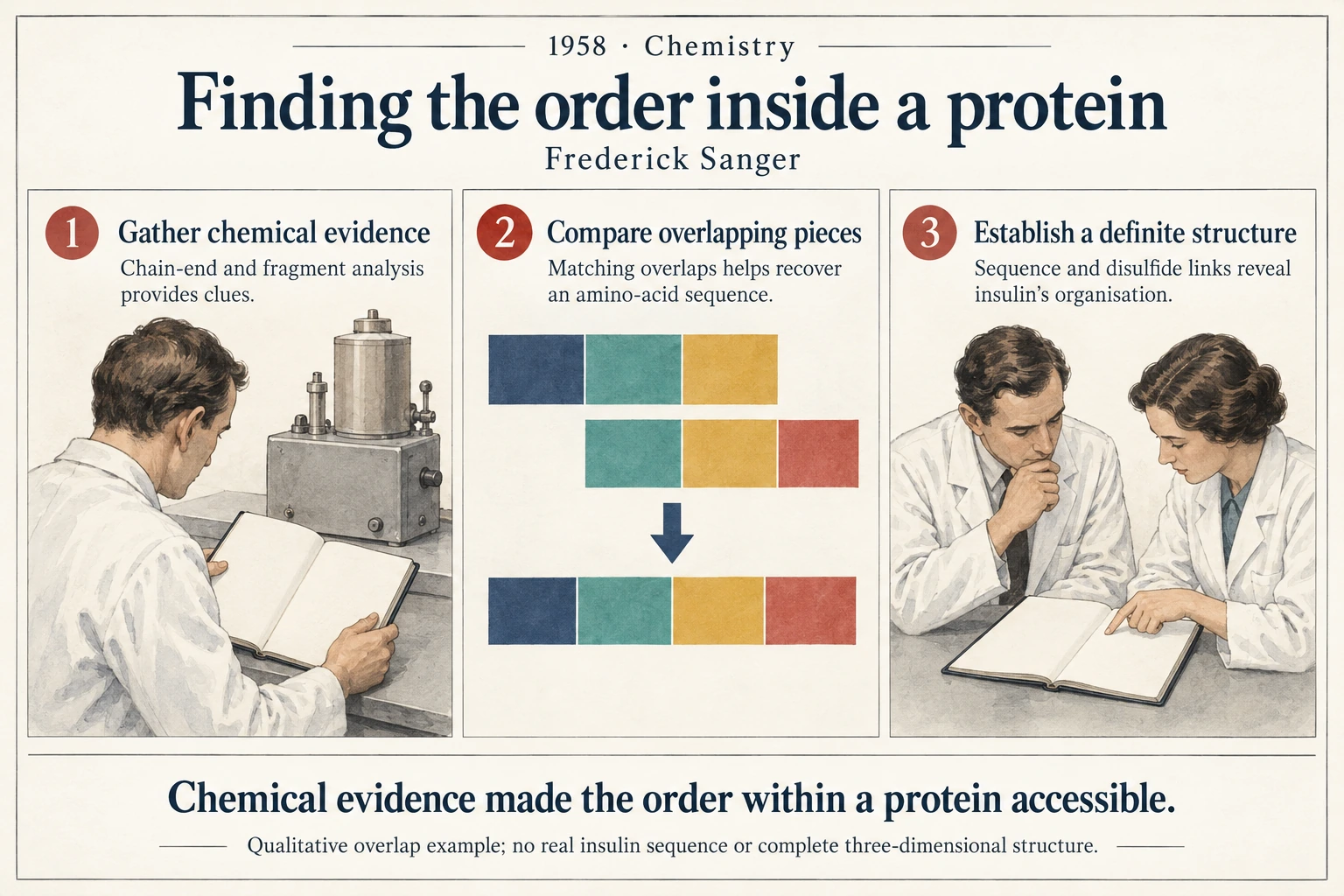
Infographic explaining Finding the order inside a protein
Original AI-generated infographic. A conceptual overview; the explanations and sources below provide context.
Read the poster text

Chemical evidence made the order within a protein accessible.

  1. Gather chemical evidence

    Chain-end and fragment analysis provides clues.

  2. Compare overlapping pieces

    Matching overlaps helps recover an amino-acid sequence.

  3. Establish a definite structure

    Sequence and disulfide links reveal insulin’s organisation.

Qualitative overlap example; no real insulin sequence or complete three-dimensional structure.

01 · The discovery

The idea, in everyday language

Knowing which amino acids a protein contained did not reveal their order. Insulin’s composition was already studied, but researchers still needed a reliable way to establish the arrangement of its chains and their links.

Sanger developed chain-end analysis and combined separation methods with the study of shorter fragments. Overlapping fragments provided evidence for reconstructing the amino-acid order. Work with collaborators including Tuppy, Thompson, Ryle, Smith and Kitai established the two chains and the arrangement of three disulfide links: two between the chains and one within a chain. His 1958 lecture described cattle insulin.

Why it matters

The work showed that a protein could be studied as a definite chemical structure with a particular sequence. It opened methods for investigating other proteins and relating their chemical organisation to function. Sanger received the full 1958 prize for protein structure, especially insulin; his later quarter share in the 1980 prize concerned nucleic-acid sequencing.
02 · The people

Who brought the idea to life?

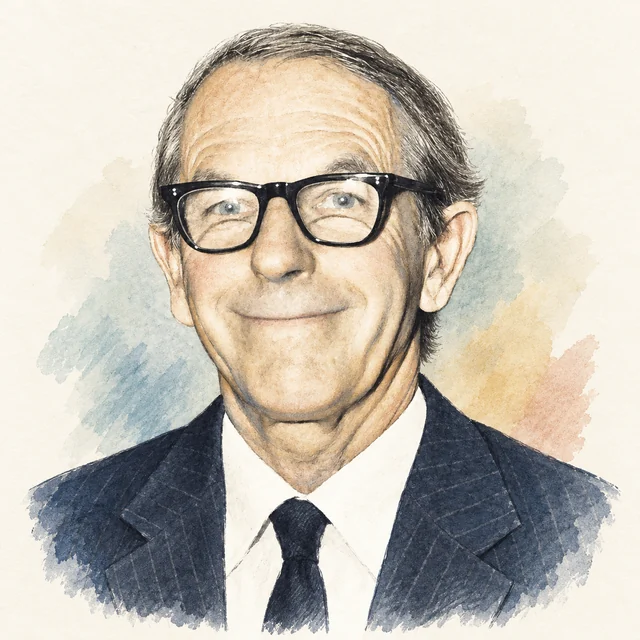
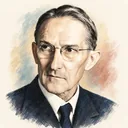
Illustrated portrait of Frederick Sanger

Frederick Sanger

Prize share · 1

Sanger established protein sequence and connectivity, especially in insulin, through sustained chemical analysis. He received the full 1958 Chemistry Prize; his 1980 sequencing prize is separate.

Read the biography ↗

03 · Years in the making

The path here

  1. 1939

    Sanger receives his Cambridge bachelor’s degree.

  2. 1943

    He completes his doctorate and turns toward protein structure.

  3. 1945

    He publishes work on identifying free amino groups.

  4. 1951

    Work with Tuppy studies insulin’s chain sequence; Sanger joins the MRC external staff.

  5. 1953

    Work with Thompson determines the other chain’s sequence.

  6. 1955

    Collaborative studies establish the disulfide arrangement and related insulin chemistry.

  7. 1958

    Sanger receives the full Chemistry Prize.

  8. 1962

    Later: he moves to the MRC Laboratory of Molecular Biology.

  9. 1980

    Later: he receives a separate shared prize for nucleic-acid sequencing.

04 · Read further

From the original sources

Original explanations by Curionode, based on the official records below. Biographical details and affiliations refer to the award year.

  1. Official award summary nobelprize.org
  2. Award ceremony speech nobelprize.org
  3. Sanger’s 1958 Nobel lecture nobelprize.org
  4. RCSB insulin structure overview pdb101.rcsb.org
  5. Official biography: Frederick Sanger nobelprize.org

More in Chemistry

Browse this subject ↗