c.curionodeThe Nobel Archive

1957 · Chemistry

Establishing the connections in biological building blocks

Todd used chemical synthesis and analysis to establish structures of nucleotides and nucleotide coenzymes.

NucleotidesChemical connectivityNucleotide coenzymes
1957Chemistry

Visual guide

The prize, pictured

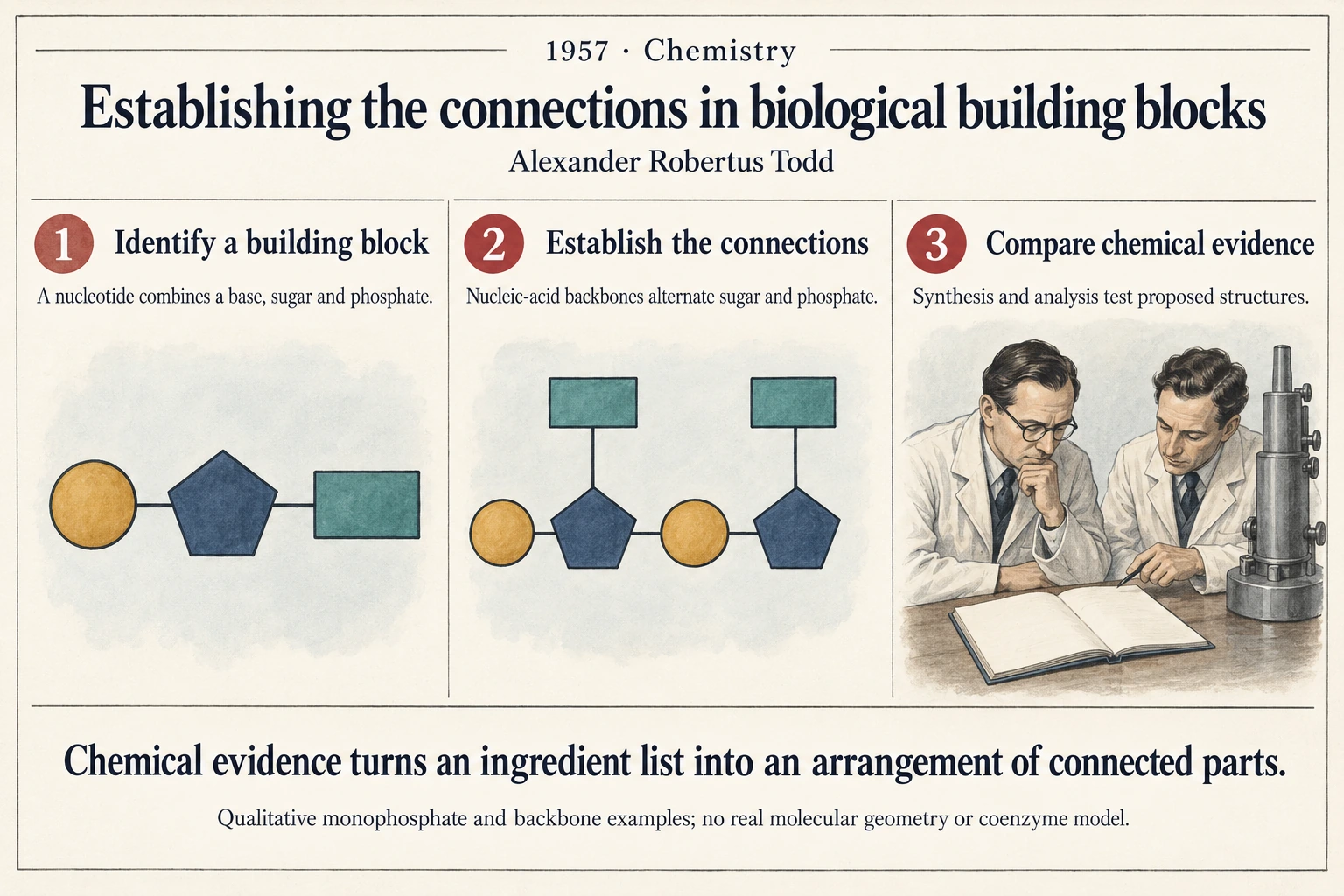
Infographic explaining Establishing the connections in biological building blocks
Original AI-generated infographic. A conceptual overview; the explanations and sources below provide context.
Read the poster text

Chemical evidence turns an ingredient list into an arrangement of connected parts.

  1. Identify a building block

    A nucleotide combines a base, sugar and phosphate.

  2. Establish the connections

    Nucleic-acid backbones alternate sugar and phosphate.

  3. Compare chemical evidence

    Synthesis and analysis test proposed structures.

Qualitative monophosphate and backbone examples; no real molecular geometry or coenzyme model.

01 · The discovery

The idea, in everyday language

Identifying the components of a biological substance did not establish how they were connected. Nucleotides combine a base, a sugar and phosphate groups; related structures also occur in coenzymes. Researchers needed chemical evidence for the arrangement and links, beyond a list of ingredients.

Todd’s work compared natural substances and their breakdown products with compounds built by synthesis. His group developed methods for constructing nucleotide structures and investigating phosphate connections. The studies helped establish the sugar–phosphate arrangement of nucleic acids and the chemistry of related nucleotide coenzymes. Baddiley and Todd reported adenylic-acid and ADP synthesis in 1947; Baddiley, A. M. Michelson and Todd reported ATP synthesis in May 1948.

Why it matters

The research gave biological chemistry more definite structures to investigate. Nucleotides form nucleic acids and also participate in other biochemical processes; nucleotide coenzymes have varied functions. The full 1957 prize recognised Todd’s work on these structures. This contribution is distinct from discovering the DNA double helix or reading a genetic sequence.
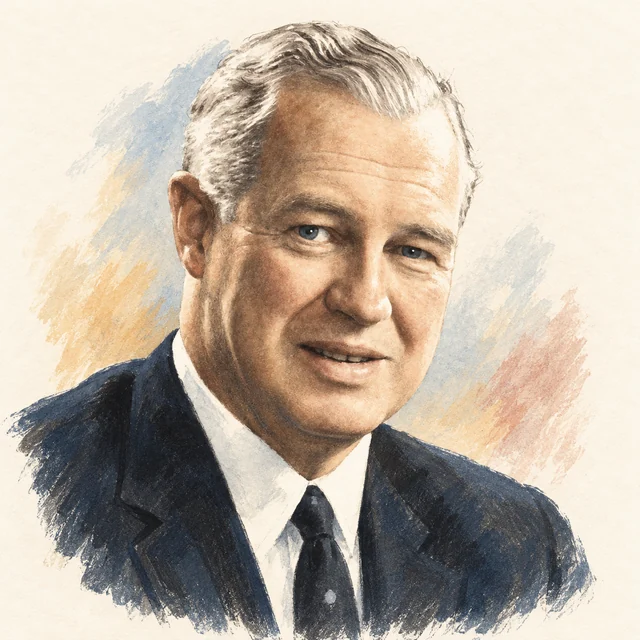

02 · The people

Who brought the idea to life?

03 · Years in the making

The path here

  1. 1928

    Todd graduates at Glasgow.

  2. 1931

    He completes his Frankfurt doctorate.

  3. 1933

    He earns a second doctorate at Oxford.

  4. 1938

    He takes the chemistry chair at Manchester.

  5. 1944

    He becomes professor of organic chemistry at Cambridge.

  6. 1947

    Baddiley and Todd report adenylic-acid and ADP synthesis.

  7. May 1948

    Baddiley, Michelson and Todd report ATP synthesis in Nature.

  8. 1954

    Todd is knighted.

  9. 1957

    He receives the full Chemistry Prize.

  10. 1962

    Later: he becomes Baron Todd.

04 · Read further

From the original sources

Original explanations by Curionode, based on the official records below. Biographical details and affiliations refer to the award year.

  1. Official award summary nobelprize.org
  2. Award ceremony speech nobelprize.org
  3. Original ADP synthesis publication metadata pubmed.ncbi.nlm.nih.gov
  4. Original ATP synthesis publication metadata pubmed.ncbi.nlm.nih.gov
  5. Official biography: Alexander Robertus Todd nobelprize.org

More in Chemistry

Browse this subject ↗