c.curionodeThe Nobel Archive

1960 · Chemistry

Reading time through radiocarbon

Libby made carbon-14 a practical clock for studying the past of biological materials.

RadiocarbonAge estimatesCalibration
1960Chemistry

Visual guide

The prize, pictured

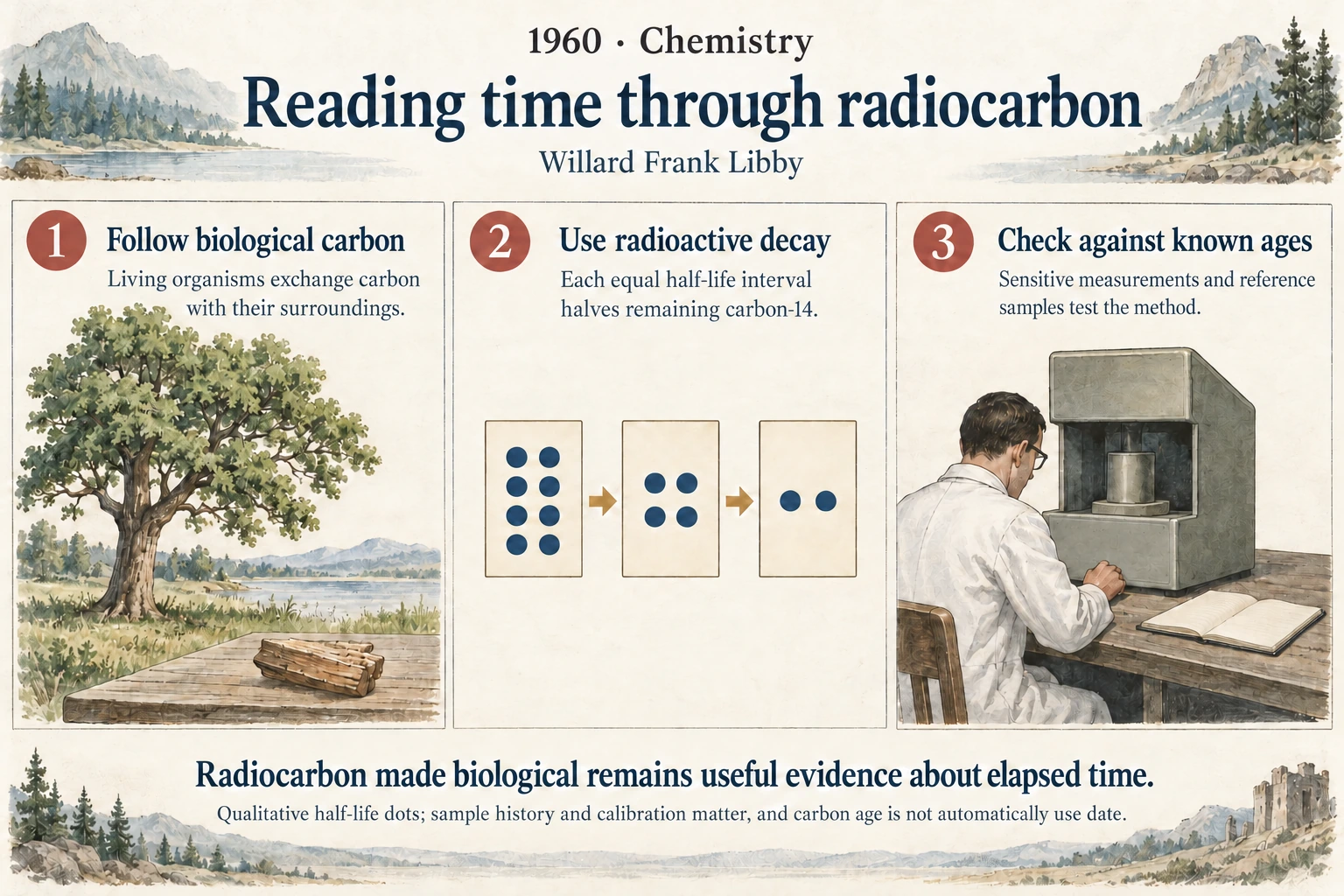
Infographic explaining Reading time through radiocarbon
Original AI-generated infographic. A conceptual overview; the explanations and sources below provide context.
Read the poster text

Radiocarbon made biological remains useful evidence about elapsed time.

  1. Follow biological carbon

    Living organisms exchange carbon with their surroundings.

  2. Use radioactive decay

    Each equal half-life interval halves remaining carbon-14.

  3. Check against known ages

    Sensitive measurements and reference samples test the method.

Qualitative half-life dots; sample history and calibration matter, and carbon age is not automatically use date.

01 · The discovery

The idea, in everyday language

Archaeologists and geologists could often put remains in relative order, but needed independent estimates of elapsed time. A dating method required a natural process whose change could be measured and checked against samples of known age.

Libby connected carbon-14 in the atmosphere with carbon entering living organisms. Once exchange of that carbon stops, its radioactive component diminishes through decay. His team established natural radiocarbon, developed sufficiently sensitive measurements and tested known-age materials. Libby and Arnold reported their comparison in 1949.

Why it matters

The method gave numerical age estimates for biological carbon, complementing historical records and geological evidence. Anderson, Arnold and other collaborators contributed to the research. Libby’s full prize recognised its development and wide importance, rather than a claim that every object or fossil can be dated this way.
02 · The people

Who brought the idea to life?

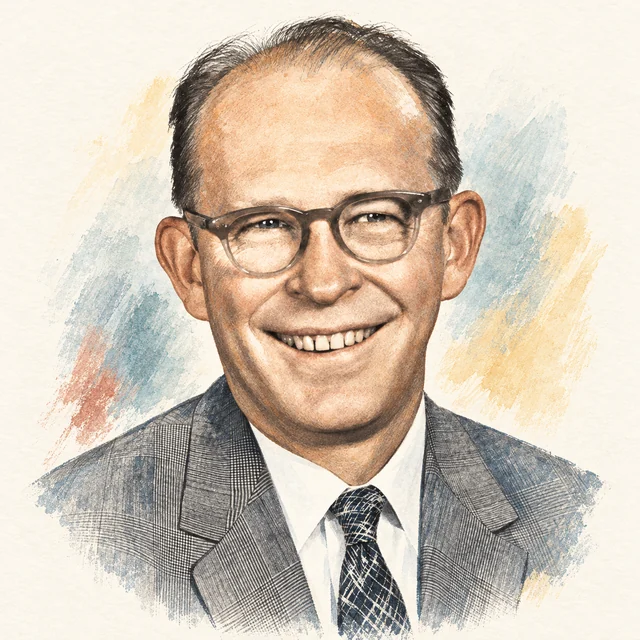
Illustrated portrait of Willard Frank Libby

Willard Frank Libby

Prize share · 1

Libby developed a practical method of estimating the age of biological carbon using carbon-14, with essential contributions from collaborators. He received the full Chemistry Prize.

Read the biography ↗

03 · Years in the making

The path here

  1. 1931

    Libby receives his Berkeley bachelor’s degree.

  2. 1933

    He completes his doctorate.

  3. 1945

    He joins Chicago.

  4. 1946

    He proposes radiocarbon dating.

  5. 1949

    Libby and Arnold report tests on known-age material.

  6. 1952

    Radiocarbon Dating is published.

  7. 1959

    He moves to UCLA.

  8. 1960

    He receives the Chemistry Prize.

04 · Read further

From the original sources

Original explanations by Curionode, based on the official records below. Biographical details and affiliations refer to the award year.

  1. Official award summary nobelprize.org
  2. Award ceremony speech nobelprize.org
  3. ACS radiocarbon history acs.org
  4. NIST carbon isotope data physics.nist.gov
  5. Oxford radiocarbon dating c14.arch.ox.ac.uk
  6. Oxford radiocarbon calibration c14.arch.ox.ac.uk
  7. Official biography: Willard Frank Libby nobelprize.org

More in Chemistry

Browse this subject ↗