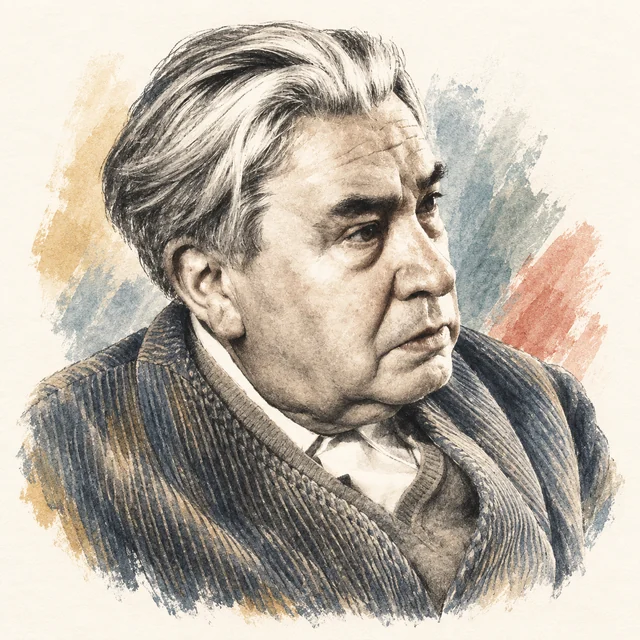
A life in context
The person behind the prize
Seifert grew up in working-class Žižkov in Prague and published poems from 1918. His first collection, Město v slzách, appeared in 1921. Journalism and translations from French accompanied his poetry. A member of the Devětsil avant-garde, he explored the playful forms of poetism in works such as Na vlnách TSF in 1925. He was expelled from the Communist Party in 1929 after joining a writers’ protest. Later collections included Maminka in 1954, Koncert na ostrově in 1965 and Být básníkem in 1983. His memoirs Všecky krásy světa appeared in exile in 1981 and in a censored Czechoslovak edition in 1982. He defended literary freedom and signed Charter 77.
The contribution
Seifert’s poetry joins freshness, sensual imagery and inventive language with affection for people, places and human freedom. Prague, love and memory recur across changing forms, from avant-garde play to later free verse. The Literature Prize recognised his poetic achievement across a body of work, rather than rewarding one political statement or one collection. He received the full prize.
The idea in plain language
Seifert’s poetry gives people and places a vivid presence through rhythm, imagery and changing forms. Prague, childhood, love and remembered encounters recur without reducing experience to a single political programme. His early participation in Devětsil and poetism encouraged playful experiments with modern life.
Read the full award story ↗

